What a Democratic House Win Means for Oversight and the 2028 Field
With polls open, the outcome of Tuesday's vote will determine whether House Democrats can launch investigations into the administration and shape the next presidential cycle.
By Thomas Obasi ·
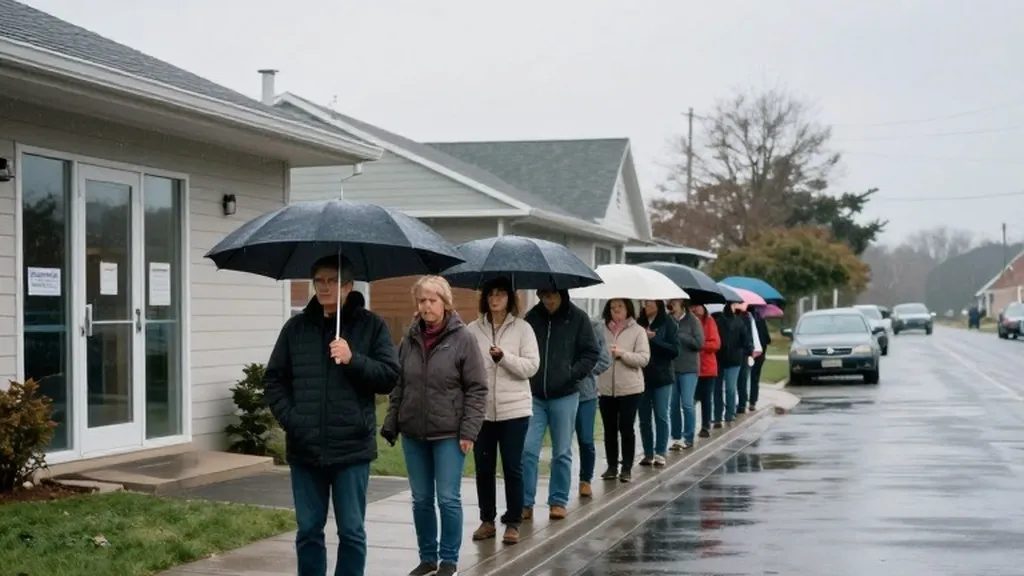
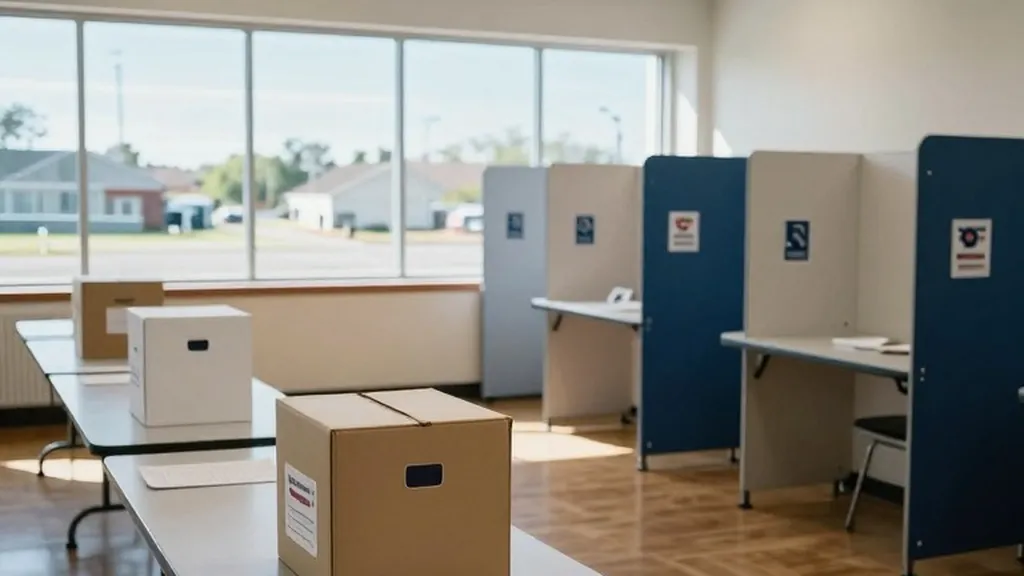
As of Tuesday morning, polls are open across the country, and voters are casting ballots to decide the balance of power in Congress for the final two years of President Donald Trump's second term. This election is a referendum on the administration's performance, with many voters citing high prices and an unpopular war with Iran as primary concerns. Only 35 percent of U.S. Adults approve of Trump's job performance, while about seven in ten say the country is heading in the wrong direction. More than 57 million people had already voted as of Monday, surpassing early voting numbers from four years ago in many closely watched states. The outcome will determine whether Democrats gain the leverage needed to challenge the administration on legislative and oversight matters.
The control of the House is central to the immediate future of the administration. Democrats need a net gain of three districts to secure a majority, while Republicans can lose no more than two seats. Ballotpedia counts 46 battleground districts in the House, with 25 held by Democrats and 21 by Republicans. If Democrats win control, House Leader Hakeem Jeffries would become the first Black speaker of the House. Jeffries has outlined a 100-day agenda that focuses on the cost of living and increased oversight of the executive branch. This agenda includes plans to launch investigations into the administration's actions, which could lead to potential impeachment proceedings. The Associated Press notes that one or two seats could tip the balance in either chamber, making the fight for the House particularly competitive.
In the Senate, the stakes are equally high, with 35 seats up for election. Republicans hold 53 seats, Democrats 45, plus two independents who caucus with Democrats. Democrats need a net gain of four seats to secure a majority, a task complicated by the fact that Republicans can lose only two seats. Ballotpedia identifies 13 Senate races as battlegrounds. Key matchups include Georgia, where Senator Jon Ossoff faces Republican Representative Mike Collins, and North Carolina, where former Governor Roy Cooper challenges former RNC chair Michael Whatley. In Michigan, Democrat Abdul El-Sayed faces Republican former Representative Mike Rogers, a race that has drawn significant attention after El-Sayed's former primary opponent endorsed Rogers. The AP notes that economic strain and tariffs have made states like Maine competitive, where Senator Susan Collins faces Democrat Troy Jackson.
The governor's races also offer a glimpse into the national political mood. Thirty-six governorships are on the ballot, and Democrats hope to hold a majority for the first time in two decades. Currently, Republicans hold 26 governor's offices and Democrats 24. In the races on the ballot, each party holds 18 offices. Democrats are defending five governorships in states that Trump won in 2024, including Arizona, Kansas, Michigan, Pennsylvania, and Wisconsin. Republicans are defending two in states that Kamala Harris won, New Hampshire and Vermont. The AP calls Texas, Florida, and Iowa competitive governor races. In Ohio, Republican Vivek Ramaswamy faces Democrat Amy Acton, a race marked by campaign controversies. In Nevada, Republican Governor Joe Lombardo challenges Democratic Attorney General Aaron Ford.
Money plays a significant role in these elections, with the 2026 cycle likely to be the most expensive in history. Republican committees have outraised and outspent Democratic committees, aided by Trump-affiliated groups and Elon Musk. However, at the candidate level, Democrats have outraised their opponents. An AP analysis of AdImpact data shows that 88.1 percent of Republican general election TV ad spending went to states and districts Trump won in 2024. This includes more than $850 million in spending in areas where he won by 10 points or more. This financial edge has allowed Republican campaigns to dominate the airwaves in key districts, though Democrats argue that voter turnout will be the deciding factor. RNC Chairman Joe Gruters stated that everything depends on turnout, while DCCC Chair Suzan DelBene said the American people are angry and want change.
Redistricting has also impacted the landscape, with six states using new congressional maps. California, Florida, Missouri, North Carolina, Tennessee, and Texas are all voting under new districts. Ohio also uses a new map. Republicans tried to use redistricting to beat the midterm pattern, which typically sees the president's party lose seats. However, new districts in Florida and elsewhere may not vote as drawn. 21 Democratic-held districts voted for Trump in 2024, while nine Republican-held districts voted for Kamala Harris. These districts are likely to be key to the outcome, as they represent areas where the partisan alignment is shifting. The new maps have created new competitive dynamics, with some districts becoming more favorable to one party or the other.
Election administration has been a point of contention, with the Trump administration taking steps it says will prevent noncitizen voting. A federal judge temporarily barred the administration from carrying out a plan on Monday, with critics saying it risks disenfranchising eligible voters. The judge also ordered the administration to stop demanding that California election officials segregate ballots cast by people on its lists of suspected noncitizens. The U.S. Postal Service added hours, staff, and special lines to ensure mail ballots are counted on time. The administration has continued to make claims about voting fraud, including that noncitizens vote in large numbers. Democrats have expressed concern about potential interference and intimidation, especially as the Justice Department threatens to prosecute local election officials. These issues have added a layer of uncertainty to the election day process.