57 Million Votes Cast: Both Parties Bet Their Midterm on Turnout
With 435 House seats and 35 Senate races up for grabs, party leaders say voter participation will decide who controls Congress in President Trump's final two years.
By Carolina Wood ·
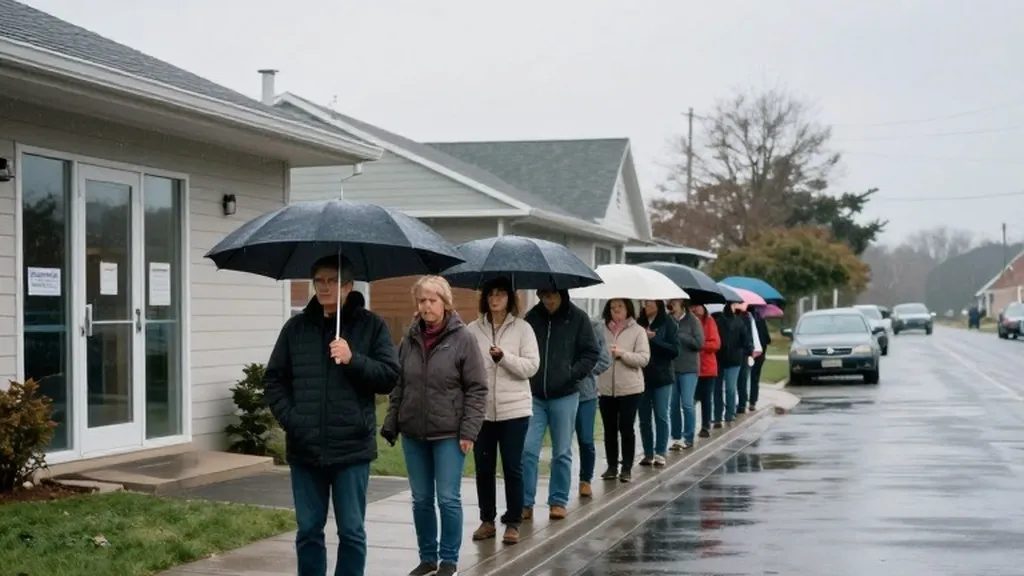
More than 57 million Americans have already cast their ballots ahead of Tuesday's election, a figure that surpasses early voting totals from four years ago in many closely watched states. This surge in early participation sets the stage for a decisive day in which voters will determine the balance of power in Congress halfway through President Donald Trump's second term. With all 435 House seats and 35 Senate seats on the ballot, the outcome will shape the legislative agenda for the remainder of the administration.
The race for the House is particularly tight, as Democrats currently hold 214 seats and Republicans hold 218. Democrats need a net gain of three districts to secure a majority, while Republicans can afford to lose no more than two seats. There are 46 battleground districts, including 25 held by Democrats and 21 held by Republicans. This narrow margin means that every vote in these competitive areas will likely influence whether the President's party retains its legislative footing.
In the Senate, the stakes are equally high with 35 seats at play, including special elections for the remnants of terms held by Marco Rubio and JD Vance. Republicans currently control 53 seats, while Democrats hold 45 plus two independents who caucus with the minority. Democrats require a net gain of four seats to take control, a task complicated by the fact that Republicans can only lose two seats to maintain their majority. The Associated Press notes that one or two seats could tip the balance in either chamber, making the ground game in key states critical.
Party leaders have emphasized that turnout is the defining factor in this election. RNC Chairman Joe Gruters stated that everything depends on voter participation, asserting that if their supporters show up, they will win. This sentiment reflects a broader Republican strategy that relies on mobilizing their base in states where Trump won in 2024. Conversely, DCCC Chair Rep. Suzan DelBene said the American people are angry and want change, highlighting the Democratic focus on economic frustrations and oversight of the administration.
The mood among voters is shaped by high prices and an unpopular war with Iran. AP-NORC polling indicates that 35 percent of U.S. Adults approve of Trump's job performance, while only 25 percent approve of his handling of the economy. About seven in ten Americans say the country is heading in the wrong direction. These sentiments are echoed on the ground, such as in Raleigh, North Carolina, where a librarian named James Moore cited increased costs for taxes and health care as primary reasons for his vote.
Financial advantages play a significant role in the campaign landscape. The 2026 elections are likely to be the most expensive in history, with Republican committees outraising and outspending their Democratic counterparts. This spending is heavily concentrated in areas that Trump won in 2024, with 88.1 percent of Republican general election TV ad spending going to those states and districts. However, at the candidate level, Democrats have outraised their opponents, suggesting a different dynamic in local races.
Redistricting has altered the political map in six states, including California, Florida, Texas, and North Carolina. These new congressional districts may not vote as predicted, adding a layer of uncertainty to the midterm pattern where a president's party typically loses seats. Republicans have attempted to use these maps to their advantage, but the effectiveness of these new boundaries remains to be seen as polls open across the country.
The administration has also been involved in legal disputes over election administration. A federal judge temporarily barred a Trump administration plan to prevent noncitizen voting, a move critics argue could disenfranchise eligible voters. Additionally, a judge ordered the administration to stop demanding that California election officials segregate ballots cast by people on lists of suspected noncitizens. These legal battles have added tension to an already high-stakes election day.
Governor's races are also pivotal, with 36 offices up for grabs. Democrats are aiming to hold a majority of governorships for the first time in two decades, a goal that requires a net gain of two seats. Key matchups include Georgia, where former Atlanta Mayor Keisha Lance Bottoms faces Republican health care executive Rick Jackson, and Ohio, where Vivek Ramaswamy competes against Amy Acton. These races will influence the political landscape beyond Congress, affecting state-level policies and future national leadership.
As polls open, the focus remains on the ground game and the ability of both parties to mobilize their voters. The Associated Press describes the election as a referendum on Trump's second term, with voters struggling with the cost of living. Whether Democrats can capitalize on their cautious optimism or if Republicans can maintain their Senate majority will depend on the final hours of voting across the nation.
The results of this election will have far-reaching implications, including the potential for increased oversight and investigations if Democrats win a chamber. House Democratic Leader Hakeem Jeffries has outlined a 100-day agenda focused on the cost of living and oversight, signaling a shift in legislative priorities if his party gains power. For now, the polls are open, and the final tally will determine who controls the levers of government in the coming years.