Midterm Wipeout: Trump Deflects Blame While Touting White House Ballroom
The president held an unscheduled press event to sign the final beam of his new building project, avoiding questions about his party's historic losses in Congress and the states.
By Natalia Costa ·
Thirty of the 39 speeches President Donald Trump delivered since September 1 included a direct instruction to voters to pretend he was on the ballot. The president used this specific framing to rally support for his party’s candidates, yet he was not himself up for election in the recent midterms.
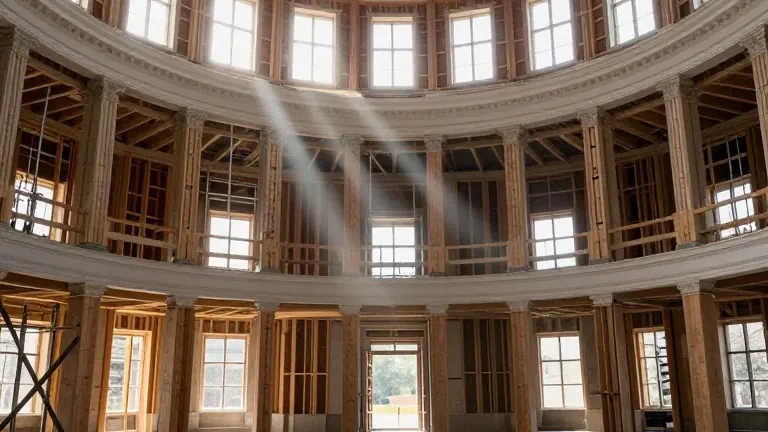
On Wednesday, Trump gathered reporters at the construction site of the White House ballroom. He had originally scheduled no public events for the day. Instead, he convened the press corps at the last minute to discuss the structure. He stood inside the building site and declared it a structure the likes of which had never been seen anywhere.
Trump presided over the installation of the final beam for the project. He stated that he would sign the beam. He did not take questions from reporters. The event served as a visual contrast to the political reality unfolding outside the capital.
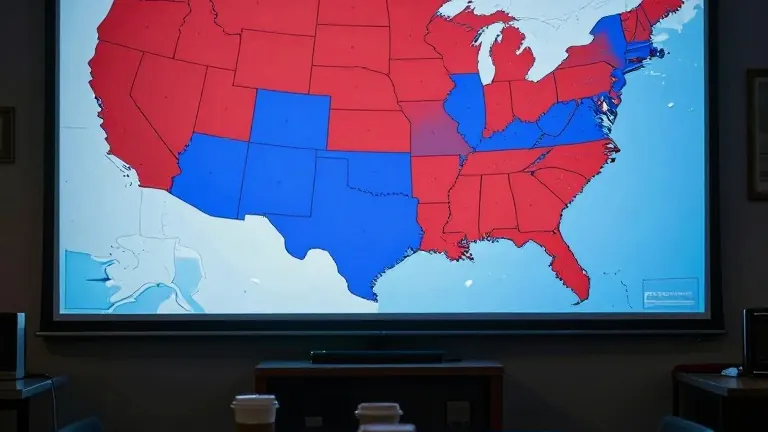
Republican candidates suffered a sweeping defeat in the midterm elections. Democrats secured control of Congress. They won Senate seats in states where the party had not held power for decades. South Carolina and Kansas elected Democratic senators for the first time since 1932. In Texas, Democrats broke a three-decade streak of losing every statewide race.
Trump has moved quickly to distance himself from these results. On election night, he told Fox News that he did not view the outcome as a personal defeat because his name was not on the ballot. He argued that voters simply did not like the specific candidates their party nominated. He added on his social media platform that he would have won the election in a landslide if he had been running.
An Associated Press voter poll indicated that Trump’s popularity dragged down Republican candidates. In Ohio, Iowa, Maine, and North Carolina, majorities of voters said their Republican Senate candidates were too supportive of the president. Trump’s national approval rating stood at 40 percent among voters.
The president has a history of shifting responsibility for electoral losses. In 2018, he blamed defeated House members for their defeats. He specifically criticized Rep. Mia Love of Utah for not giving him enough love. He used the phrase My name wasn’t on the ballot to mock losing lawmakers in Florida, Colorado, Virginia, and Illinois. That was eight years before he used the same logic in this cycle.
Presidents typically acknowledge their role in midterm losses. Barack Obama described the 2010 Republican gains as a shellacking. George W. Bush called the 2006 Democratic victories a thumping. Trump began laying the groundwork for this election cycle in August. He told Punchbowl News that voters were angry at Republicans but not angry at him.
He pointed to specific losses in Texas. Senate candidate Ken Paxton lost, and Trump blamed weak political hacks like John Cornyn and Karl Rove. Governor Greg Abbott also lost. Trump claimed Abbott lost because he became a Republican in Name Only in the final six months of his political life. Trump did not immediately claim widespread fraud, a tactic he used after his 2020 defeat. He previously called for the criminal prosecution of Alaska candidate Mary Peltola before the vote.