Trump's $5,000 dividend promise faces reality check as Democrats win Congress
With Republicans losing control of both chambers, the cost and legal hurdles of the president's campaign pledge become clearer for skeptical voters.
By Natalia Costa ·
President Donald Trump’s pledge to send every American adult a $5,000 check if his party retained control of Congress has taken on new urgency following Tuesday’s election results. The Associated Press reported that Democrats have won control of both the U.S. House and the U.S. Senate, a outcome that fundamentally alters the political landscape for the president’s fiscal promises. This victory serves as a stark referendum on the administration’s economic record, with voters citing high prices and the war in Iran as primary drivers for their ballot choices. The promise, made at the Republican Midterm Convention in Dallas, is now being scrutinized not just as a campaign slogan, but as a potential policy proposal that must navigate a Democratic-led legislature.
Trump made the unusual pitch at the party’s convention, telling the crowd that if Republicans won both chambers, they would get $5,000. He referred to the payment as the Trump dividend, comparing it to how successful companies distribute cash to shareholders. The president argued that the country’s tremendous economic success and high tariff revenues made the payment possible. However, the condition was explicit: the check was contingent on Republicans keeping the House and Senate. With Democrats now holding a majority in both chambers, the direct mechanism for delivering the dividend through a unified Republican government has been severed.
House Speaker Mike Johnson, R-La., acknowledged the legal requirements of the plan during interviews this week. He stated that congressional approval is needed for such a massive expenditure. Johnson said he would assume the president would need Congress to act and called it a creative idea. He pledged to work to get the proposal through despite the slim Republican margin in the House before the election. However, with the chamber now controlled by Democrats, the path to that approval becomes significantly more complex. Johnson’s comments highlight the tension between the executive branch’s desire to fulfill campaign promises and the legislative branch’s power over spending.
PolitiFact has analyzed the feasibility of the $5,000 dividend, noting that the biggest payment is far from certain. The organization pointed out that the administration has announced no formal plan for how Americans would receive the checks. PolitiFact found that the payment could cost the federal treasury more than $1 trillion, a figure that would strain the country’s nearly $1.8 trillion annual budget deficit. Fiscal experts cast doubt on the plan during a time of existing economic challenges, including persistent inflation and rising interest rates. The lack of a detailed implementation strategy remains a significant hurdle for the proposal.
The funding source for the dividend has been a point of contention. Trump cited tariff revenues as a potential source, but lawmakers did not include a separate tariff dividend in the One Big Beautiful Bill Act that became law in 2025. Erica York, a senior economist at the Tax Foundation, wrote that the cost of the checks would spend almost all the revenue that new tariffs are projected to bring in over a decade. This analysis suggests that relying solely on tariff income is insufficient to cover the $1.2 trillion cost of sending checks to the estimated 245 million U.S. citizen adults. The discrepancy between the projected revenue and the total cost of the dividend underscores the financial challenge ahead.
Bipartisan criticism of the plan emerged even before the election results were finalized. Some Republicans questioned the price tag, with Texas Congressman Chip Roy writing that dependency is evil and soul-sucking in all its forms. Democrats argued that the promise was an attempt to buy votes during a critical election cycle. Election law expert Rick Hasen noted that while promising a financial incentive is likely legal under the First Amendment, the power to actually deliver the money lies with Congress. This legal distinction between making a promise and executing a policy is now central to the debate over whether the dividend will ever reach voters’ bank accounts.
Democratic leaders have welcomed the election results as a generational remake of the Senate map. Senate Leader Chuck Schumer of New York emphasized that Americans voted for change, a sentiment echoed by voters frustrated with the cost of living and the administration’s handling of the Iran war. The Democratic victory in both chambers means that the president will face a stronger opposition in Congress. This new dynamic could lead to more gridlock, particularly on fiscal matters that require bipartisan support or a supermajority in the Senate to overcome procedural hurdles.
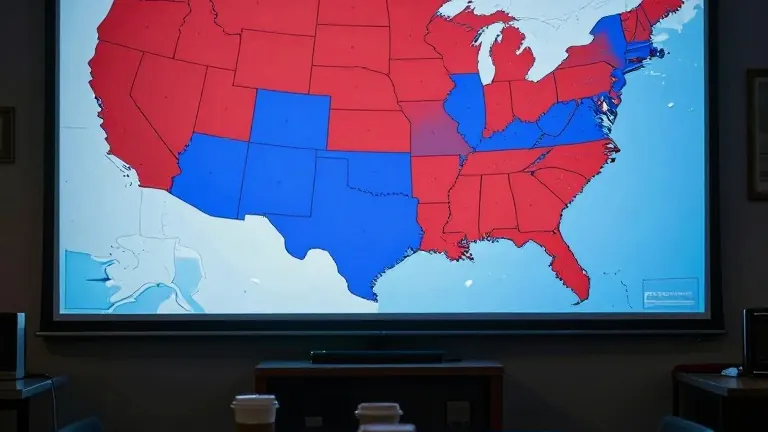
The political implications of the dividend promise extend beyond the immediate question of funding. The promise was tied to a specific political outcome that did not materialize. As the Associated Press reported, voters in states like Texas, Ohio, and Kansas backed Democrats for the U.S. Senate, overturning long-standing Republican holds. This shift suggests that voters prioritized their economic concerns over party loyalty to the president. The failure of the Republican ticket to maintain control of Congress may weaken the argument that the dividend was a guaranteed reward for party supporters, turning it into a policy proposal that must compete with other priorities in a divided government.
Speaker Johnson’s commitment to working through the proposal may face immediate resistance from the new Democratic leadership. The Democrats, who have highlighted the cost of living as a central issue, will likely scrutinize any new spending measure for its impact on the national debt and inflation. The president’s claim that inflation is solved, made in an interview on Fox News, contrasts with data showing consumer prices rose 3.6% in September from a year earlier. This disconnect between the administration’s narrative and economic data will likely inform the legislative debate over the dividend, with Democrats using the figures to argue against the proposal.