Brazilian Election: Lula and Bolsonaro Clash in Final Debate
With polling showing a dead heat, the two main candidates traded sharp critiques on economic policy and public safety in their last televised meeting.
By Natalia Costa ·
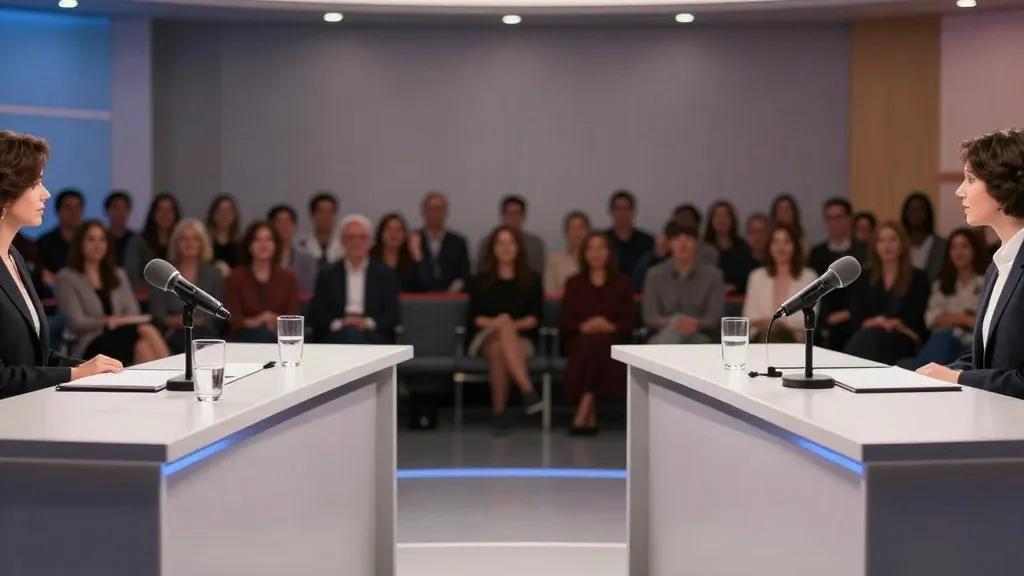
An 80-year-old president found himself at the center of a tense political exchange on Friday as Brazilian leader Luiz Inacio Lula da Silva faced off against his right-wing rival Flavio Bolsonaro. The two men met for the final debate of the presidential campaign, a pivotal moment occurring just two days before the run-off vote scheduled for Sunday. The session served as the last formal opportunity for both candidates to directly challenge one another on key policy issues before millions of voters head to the polls.
The discussion focused heavily on the state of the national economy, infrastructure, and regional development. Lula targeted his opponent’s plan to reduce public spending, a strategy he described as using a chainsaw. He drew a direct comparison between this approach and the policies of Javier Milei, the libertarian president of Argentina. Bolsonaro accepted the analogy and turned it against the incumbent. He stated that he would face the same job as Milei because Lula was leaving the country bankrupt.
Bolsonaro, who serves as a senator and is the son of former right-wing President Jair Bolsonaro, accused the incumbent of allowing organized crime to expand. He argued that current policies were pushing families into debt and failing to address the high cost of living. Lula, who holds the distinction of being Brazil’s first working-class president, responded with personal critiques. He remarked that his rival did not know what hunger was. Bolsonaro countered by asking why things were so expensive, a question that highlighted the economic anxieties of many voters.
Lula also questioned the senator’s experience in governance, declaring that he did not know Brazil. Bolsonaro pressed forward with his message that he is a capable candidate committed to bringing about change. The debate took place in Rio de Janeiro and was broadcast on TV Globo. While the atmosphere was noticeably more diplomatic than the first meeting between the two candidates on Sunday, it still featured moments of tension and personal attacks.
One significant moment of friction occurred when Bolsonaro used the nickname Nine Fingers for Lula. This term is pejorative and refers to an accident Lula suffered while working as a metalworker. Many of Bolsonaro’s supporters use the label. The president demanded an apology, which Bolsonaro offered. The tension continued when Lula called his rival a vigilante, a reference to allegations that Bolsonaro has ties to paramilitary groups in Rio de Janeiro. Bolsonaro responded by saying he would classify such groups as narcoterrorists.
A third heated exchange involved the mother of a five-year-old child who was killed in a shootout. The incident included a police officer whose lawyer was Bolsonaro. During the debate, the candidate stated that he does not believe his client was guilty. This interaction illustrated how personal and legal issues remain entangled with the broader political narrative in the race.
The path to the presidency has become significantly tighter in recent weeks. Bolsonaro finished first in the opening round of voting on October 4, securing 47 percent of the vote compared to Lula’s 45 percent. However, a survey by the Datafolha institute published on Thursday showed the two candidates level at 50 percent each. This result erased the four-point lead Bolsonaro had held in polls released two weeks prior.
Both candidates are expected to join their supporters on the streets of Rio de Janeiro and Sao Paulo for their final campaign push. These events will serve as the last major public appearances before the decisive vote on Sunday. The close polling suggests that the outcome of the election remains highly uncertain heading into the final hours of the campaign.