AI Tools Reshape Teaching Expectations
A new approach to classroom instruction requires students to explain their use of artificial intelligence while maintaining critical oversight.
By Carolina Wood ·
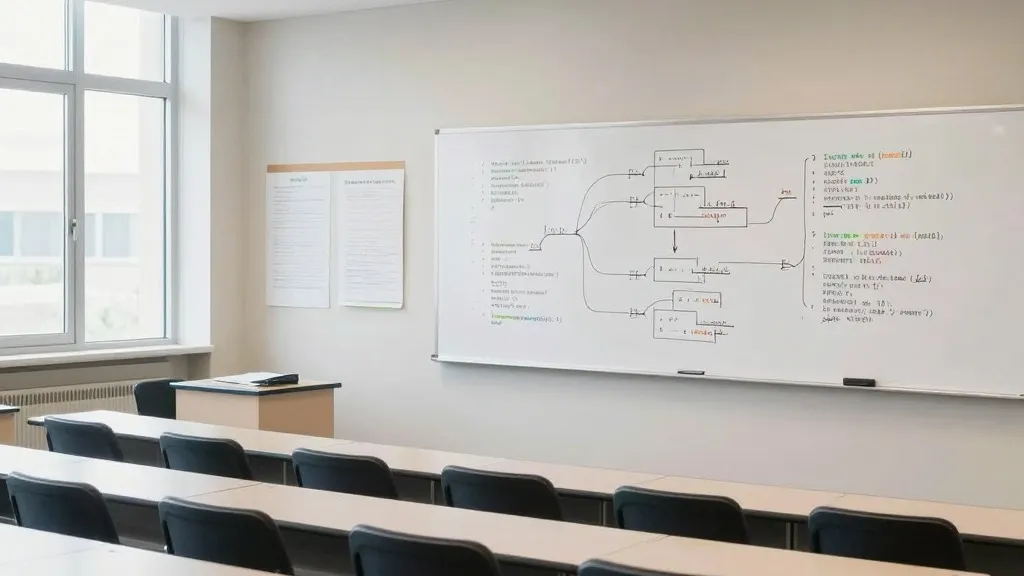
Students in higher education are facing a shift in how they demonstrate their knowledge. They can no longer submit answers generated entirely by software. Instead, they must show a clear understanding of the tools they use and explain the process behind their work. This change places the burden on learners to remain active participants in their own education rather than passive recipients of algorithmic output.
The core of this new standard is transparency. Instructors are now asking students to identify exactly when they used artificial intelligence and why. The technology must be credited, and the specific methods of application must be detailed. This ensures that the student is guiding the tool, not just following its suggestions. The goal is to bridge the gap between using a powerful resource and actually learning the material.
Prof. Claudia V. Goldman, an associate professor in the Data Science Department at the Hebrew University Business School, describes this method as a way to solve real-world problems. She has held this position since July 2024. Her approach rejects the idea that fully AI-generated responses are acceptable. She tells her classes that she can detect machine-written text. Therefore, students are encouraged to use these tools for brainstorming but must stay critical of the output. They are taught to check for bias and to verify that cited sources actually exist.
This method changes the traditional assessment model. Goldman does not rely solely on written exams. She evaluates students through a mix of in-person activities. These include classwork, presentations, and discussions. Students also organize activities for their peers. This allows the professor to assess their understanding directly. The classroom also serves as a space to discuss human responsibility and professional values. Students consider what kind of researchers and professionals they want to be.
The broader academic environment is adapting to these changes. The Business School offers specific courses in this area. These include AI for Social Good, Responsible AI, and When AI Meets Humans and Society. The university also runs a Free Listener Program. This initiative allows senior citizens to audit courses. The fall semester is currently beginning, bringing these new expectations to a wider audience.
Goldman’s perspective is informed by her industry background. Before joining the Hebrew University, she worked for 15 years as a research scientist at General Motors. She also spent three years as a team leader at Samsung Telecom Research. At General Motors, she worked on introducing learning agents into the vehicle user experience. This work focused on helping drivers stay focused on the road and better understand autonomous driving functions. She holds 24 patents and has published more than 50 academic papers.
Her career path began after she moved to Israel in 1984. She was born in Argentina and moved to Jerusalem with her family at age 16. She finished high school in 1986 and served in the army. She then earned three degrees at the Hebrew University. She received a BSc in computer science, mathematics and electronics in 1991. She followed this with an MSc in computer science in 1993 and a PhD in computer science in 1999. Her doctoral supervisor was Prof. Jeff Rosenschein.
Goldman also holds research posts at Bar-Ilan University, the University of Massachusetts Amherst, and the University of Haifa between 1999 and 2005. She has spoken to the concept of keeping some jobs exclusively for humans. She notes that this is not a simple binary choice. Instead, it requires understanding the benefits AI can bring in different roles. It also requires identifying the critical skills needed to strengthen human workers in those contexts.
Her personal history reflects a commitment to this new home. Her grandparents came to Argentina before many relatives were murdered in the Holocaust. She attended a Jewish school in Buenos Aires through seventh grade. She studied in Yiddish, Hebrew and Spanish. Her father wanted to leave Argentina for a long time. In 1983, she told him that Israel was the only place she saw herself growing up. The family made aliyah six months later. She met her husband, Prof. Roy Shenhar, on the Hebrew University campus in 1995. They married in 1999.