Oil Hits $117 as Iran Declares US Warships Off Limits
Iranian military leaders have stated that American naval vessels cannot re-enter the Persian Gulf, a move that has sent global oil prices to their highest point since April.
By Carolina Wood ·
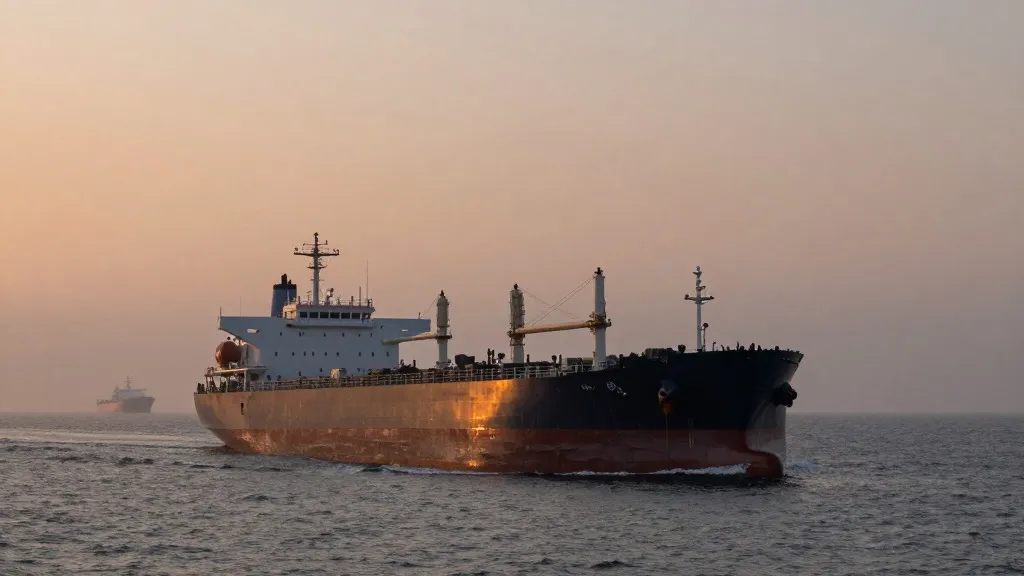
The cost of fuel and the safety of global shipping lanes are facing immediate pressure as Iranian officials declared that US warships are no longer welcome in the Persian Gulf. This declaration comes just as crude oil prices surged to approximately $117 per barrel, marking the highest level since April. For families relying on cars and trucks, this spike in energy costs often translates to higher prices at the pump within weeks. The tension is not just theoretical; it is directly affecting the flow of goods and resources that support daily life in many parts of the world.
The numbers behind this shift are stark. Brent crude, a global benchmark for oil prices, jumped to its peak level for the year following reports of renewed hostilities. The Islamic Revolutionary Guard Corps announced that seven tankers were attacked or struck by mines in the hours leading up to Thursday. By Friday, the group claimed two additional supertankers had been hit. These incidents have made the Strait of Hormuz, a critical chokepoint for global energy, a primary zone of conflict. The financial impact is already visible in market reactions, with investors pricing in the risk of a prolonged disruption to supply chains.
At the center of this escalation are President Donald Trump and Ali Abdollahi, the chief of general staff for Iran’s armed forces. Speaking to supporters in Florida on Friday, Trump suggested that the United States might launch another massive bombing campaign, a strategy he referred to as another Epic Fury. He indicated that Washington has not yet decided whether to end the fighting quickly with force or to continue the current naval blockade and sanctions. In response, Abdollahi issued a statement through state media on Saturday morning. He argued that US rhetoric is contradictory because Washington claims Iran’s military is weakened but keeps its aircraft carriers at a distance. Abdollahi stated that the US president can only dream of soldiers re-entering the Persian Gulf, as Iran is ready to target any vessel in the region.
The stakes for ordinary people extend beyond fuel prices to include broader regional stability and public safety. The war, which began with a surprise attack on February 28, has now lasted eight months and has unsettled the entire region. Iranian forces have stated their intent to keep the US and Israel in a quagmire. This prolonged conflict has led to a more offensive doctrine for the IRGC, which has threatened to target seabed internet and communication cables if civilian infrastructure is hit again. Such actions could disrupt digital connectivity and services that millions rely on for work and communication.
Other fronts of the conflict are also active, adding to the complexity of the situation. The Houthis, an Iran-aligned group in Yemen, struck Riyadh on Saturday after recent attacks on Dammam’s airport and the Shaybah oilfield. In southern Lebanon, Israeli air strikes hit areas near Nabatieh, while artillery fell near Zawtar ash-Sharqiyah. Meanwhile, Israeli Prime Minister Benjamin Netanyahu ordered a lockdown of the occupied West Bank following a Palestinian attack that killed two soldiers in Hebron. Netanyahu faces a general election on October 27, which adds a political dimension to the military decisions being made in the region.
Diplomatic efforts have struggled to keep pace with the military developments. Mediated talks between Tehran and Washington have produced no significant progress. On Friday, senior diplomats from Turkiye, Saudi Arabia, Pakistan, and Egypt met with counterparts from the UK, France, Germany, and Italy in Istanbul. Neither the US nor Iran was present for these discussions. Hakan Fidan, the foreign minister of Turkiye, warned that a new attack on Iran would widen the war and spread the conflict across the region. He noted that no one is currently endorsing such a move. German Foreign Minister Johann Wadephul blamed Iran and the Houthis for the instability, while the four regional ministers pointed to the Israeli occupation as the main source of the problem.
Iranian state media and analysts have framed this moment as a critical juncture. Reports indicate that Tehran has activated a dead hand doctrine, which would allow attacks on US and Israeli interests to continue from all 31 provinces if senior leaders are assassinated. This strategy aims to ensure continuity in the conflict regardless of leadership changes. Reza Nasri, an analyst, wrote on X that Iran will no longer negotiate under bombardment and intends to end the cycle by all necessary means. The reformist newspaper Etemad suggested that the zero hour for another intense round of fighting is approaching, signaling that the next phase of the war may be imminent.
Washington has reportedly ordered many diplomatic staff to leave Saudi Arabia, with others expected to depart from additional countries in the region. This movement of personnel underscores the growing sense of risk among Western nations. As the US weighs its next steps, the combination of high oil prices, active naval threats, and diplomatic friction creates a volatile environment. For working families and global markets, the coming days will likely be defined by the balance between military escalation and the hope for a negotiated resolution that can lower the cost of living and secure trade routes.