Bavaria to rebuild Eagle's Nest after fire destroys summit structure
Interior Minister Joachim Herrmann ordered the reconstruction of the Kehlsteinhaus following a blaze that local media described as a total loss.
By Thomas Obasi ·
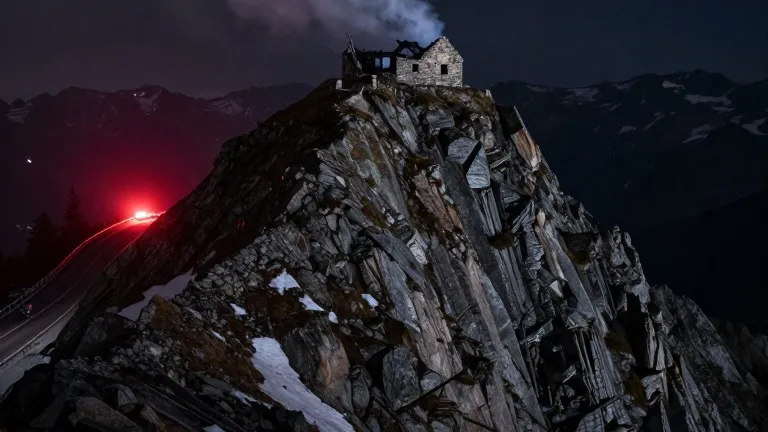
The Kehlsteinhaus, a mountain summit building in Bavaria associated with Adolf Hitler, burned to the ground on Friday night, prompting the state government to order a full reconstruction. Interior Minister Joachim Herrmann stated that the site would not be left as a ruin and emphasized the need to maintain its function as a place of remembrance.
Police in the southern German state of Bavaria detained a 33-year-old German man near the scene on a motorcycle. The arrest followed a fire alarm received by dispatchers in Traunstein at 21:15 local time on Friday. Firefighters arrived to find the structure engulfed in flames, and the difficult terrain at the altitude made it difficult to control the blaze quickly. No injuries were reported among the roughly 200 emergency personnel deployed to the area.
Local police official Gerhart Holzinger held a press conference to confirm that a criminal investigation is underway. He stated that there is currently no evidence of any other suspects involved in the incident. Police are examining the possible motive for the fire, which local media reported had largely destroyed the site. Officials urged the public to stay away from the area while investigations continued.
The Kehlsteinhaus, commonly known as the Eagle's Nest, sits at an elevation of approximately 1,800 meters above the town of Berchtesgaden. Completed by the Nazis in 1938, the building survived the end of World War II in 1945. It served as part of Hitler's headquarters complex, where he and senior officials met and planned military operations, including the 1941 invasion of the USSR from his nearby Berghof residence.
The site has functioned as a popular tourist destination and mountain inn since the war. Its official website describes the location as a cautionary reminder of the Nazi dictatorship. The building was also used as a backdrop for propaganda films designed to portray Hitler as a lover of animals and nature. Hitler and his followers were responsible for the deaths of tens of millions of people, including the mass murder of European Jews and other groups sent to concentration camps.
Debates over how to handle structures linked to Hitler have continued in Germany and Austria for years. Some advocates argue for preservation for historical reasons, while others worry such sites could become pilgrimage destinations for far-right extremists. In June, Berlin authorities announced plans to demolish one of Hitler's bunkers to build flats and offices, a move critics opposed in favor of a museum. In July, Austrian authorities converted Hitler's birthplace in Braunau am Inn into a police station after years of controversy.
Bavaria's decision to rebuild follows a pattern of recent decisions regarding Nazi-era buildings. The reconstruction order was issued after the total loss of the summit inn, ensuring the site remains a physical location for historical reflection rather than a vacant ruin. The criminal investigation into the fire's origin is expected to continue as authorities gather evidence.