Votel: 4 Years of Command Experience Shapes Iran Strike Assessment
The retired general argues that without a defined end state regarding Hormuz and enrichment, new attacks will only degrade Iranian capabilities without ending the conflict.
By Natalia Costa ·
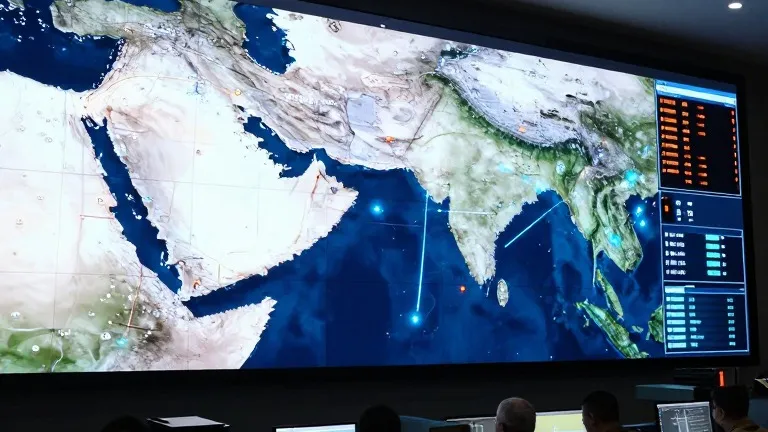
Retired Army Gen. Joseph Votel asserts that a new round of U.S. and Israeli strikes on Iran will weaken the nation's military capacity but will not conclude the war. Votel, who commanded U.S. Central Command from 2016 to 2019, told NPR's Leila Fadel that previous bombing campaigns have already targeted most likely assets. He noted that Iran has demonstrated the ability to rebuild these targets, meaning fresh attacks will primarily serve to punish Tehran and buy time rather than alter its strategic calculus.
The general identified two specific conditions that must define the end of the conflict: the resolution of the nuclear enrichment issue and the reopening of the Strait of Hormuz. Votel stated that Washington must explicitly define these objectives before launching further military action. He argued that military force is only one component of national power and must be coordinated with economic, diplomatic, and informational pressure to achieve these goals.
Economic pressure is currently showing visible results, according to Votel. He cited recent reporting indicating that Iran's "ghost fleet" has exhausted its oil supplies due to the ongoing blockade and sanctions. While this financial strangulation takes time to fully impact the Iranian economy, Votel described the progress on this front as definite and moving in the desired direction.
Votel acknowledged that U.S. objectives have been difficult to discern publicly. He explained that reopening the Strait of Hormuz would facilitate the flow of oil and commerce, which would help lower gas and diesel prices in the United States. He also identified Iran's nuclear program and its use of regional proxies, including the Houthis, as secondary concerns, but maintained that Hormuz and enrichment remain the principal worries for American security.
Regarding military readiness, Votel said the U.S. possesses substantial offensive power in the region. However, he warned that missile defense systems may face constraints. Earlier reports have noted heavy pressure on the defensive interceptors that protect U.S. forces and critical infrastructure in the Gulf. Votel assessed that while the ability to strike remains strong, the defensive shield may be the limiting factor in a prolonged conflict.
To bring Iran to the negotiating table, Votel recommended a clear statement of objectives and a coordinated use of all available tools of national power. He emphasized the need for patience in executing this multi-pronged approach. Votel currently chairs the Combating Terrorism Center at West Point, where he oversees research into asymmetric threats.