Midterm Polls Capture Democratic Surge, But Miss Key Senate Margins
While opinion surveys correctly predicted a shift in power, they failed to accurately measure the voting gap in three high-profile Senate races.
By Thomas Obasi ·
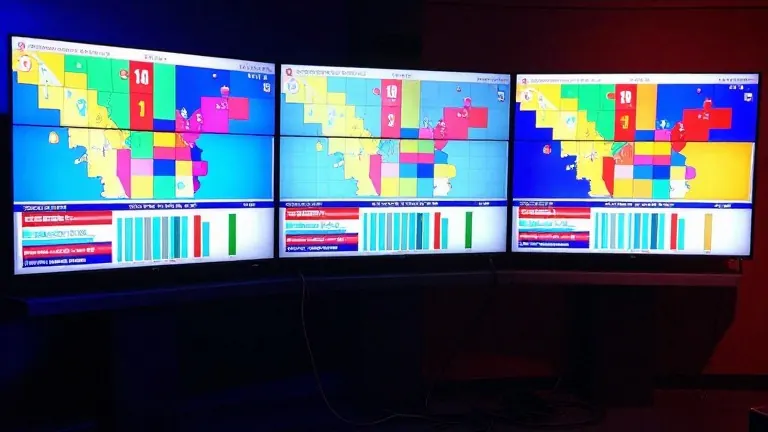
Preelection polls successfully signaled a strong shift toward Democratic candidates in the 2026 midterm elections, marking a rare moment of accuracy for the industry. The surveys indicated that voters were likely to punish the party holding the presidency, a trend that played out on Election Day. This performance stands as one of the most reliable for pollsters since 2008, when they correctly projected Barack Obama’s victory. Despite the general accuracy, the data contained specific errors in closely watched Senate contests.
The overall trend pointed to Democratic gains, which matched the final results. Pollsters and media analysts remained cautious in their predictions, aware of historical errors in sampling and respondent bias. Nate Cohn, chief political analyst for The New York Times, warned just before the election that polls might be overestimating Democratic strength. He noted that President Trump’s supporters often skip surveys, creating a risk of misreading the electorate. That specific fear did not materialize in the final count.
The results confirmed a standard pattern in American politics where midterms are difficult for the president’s party. President Trump’s approval ratings hovered at or below 40% in the weeks before the vote, according to RealClearPolitics data. Low approval often correlates with a loss of seats for the ruling party. The ongoing conflict with Iran, which Trump initiated, contributed to the poor polling numbers. Fuel prices rose during the war, adding financial strain to consumers and shaping voter sentiment.
Polling analyst Nate Silver observed that Trump’s ability to mobilize low-propensity voters usually fails when he is not on the ballot. Trump urged his supporters to act as if his name were on the ticket throughout the campaign. That strategy did not change the outcome. The electorate’s mood remained aligned with the president’s low approval ratings, leading to the expected turnover.
Precision remained elusive in specific Senate races. In Texas, pollsters offered conflicting numbers for Republican candidate Ken Paxton. Some surveys showed him up by one point, while others had him down by seven. The final margin was a double-digit loss for Paxton to Democrat James Talarico. No pre-election survey captured that wide gap.
Similar discrepancies appeared in Maine and Minnesota. In Maine, surveys ranged from Susan Collins ahead by two points to a nine-point deficit for the long-serving Republican senator. Democrat Troy Jackson ultimately won by more than six points. In Minnesota, Democratic candidate Peggy Flanagan was polled as high as 14 points up and as low as two points up. The actual margin of victory settled near 10 points. These variations remind observers that single surveys can be outliers, and averages provide a clearer picture.
The number of major polling errors was lower than in recent cycles. A notable miss occurred in the Texas governor’s race, where Democrat Gina Hinojosa won by double digits against incumbent Greg Abbott. Pre-election polls had Abbott leading by a small margin. Aside from that race, the broad direction of the vote was clear. The industry has not fully solved its problems with reaching hard-to-reach voters, but the 2026 results avoided the large-scale failures of previous years. The data accurately depicted the electorate’s inclination, even if the exact math was off in a few states.