European protests see fewer arrests in France but clashes in Germany
Police deployed 70,000 officers in France for Saturday's marches, while Frankfurt authorities reported over 100 injuries during nighttime riots.
By Thomas Obasi ·
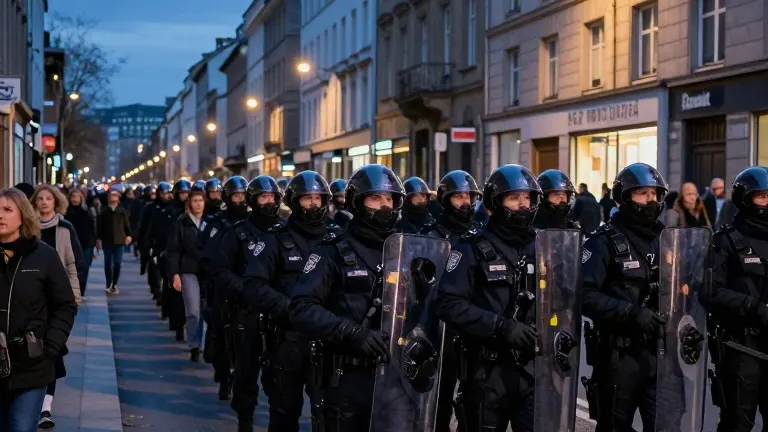
French authorities expressed relief on Sunday after massive protests over the rising cost of living resulted in less violence than in previous weekends. Police forces across the country deployed approximately 70,000 officers for the marches that took place on Saturday. A national police official stated that authorities prepared for high attendance from both peaceful demonstrators and rioters. The official noted that tensions are expected to rise again as schools reopen on Monday and as student groups and unions call for new national protests on Tuesday and Thursday.
In Paris, rioters threw Molotov cocktails at police at the end of the march in the eastern part of the city. This incident left three agents injured and one car on fire, according to police reports. On the opposite side of the city, masked groups launched fireworks at officers on a viewing platform near the Eiffel Tower. Police charged repeatedly into the crowd, causing frightened tourists to flee the area. The overall level of violence was lower than on October 17, when a town hall building was set on fire and more than 2,000 shops were looted. Police also reported attacks on a few shops in Paris and Marseille, but the damage was not considered severe.
The number of arrests reflected the decrease in disorder. Police detained 779 people by Saturday night. This figure is down from 2,628 arrests on October 17 and 1,314 arrests the previous weekend. The reduction in detentions marked a clear shift from the chaotic days earlier in the month, when authorities appeared unprepared to control the hours of violence.
Germany faced its own challenges during the national protests held on Saturday. More than 100,000 people, mostly young, marched peacefully across the country. They demanded that the government invest more money in education, housing, and environmental protection, and that it make daily life more affordable. While the daytime marches were largely calm, violence broke out in several cities during the night.
In Frankfurt, rioters attacked police in the city center and looted stores. More than 100 officers were injured, and 54 people, aged between 13 and 29, were detained. Police said 17 stores suffered damage and five were looted. The situation calmed down in the early hours of Sunday morning after police cordoned off an area of the city center. Boris Rhein, the governor of Hesse, where Frankfurt is located, said he was shocked by the violent excesses. He stated that anyone who behaves like the attackers in the center of Frankfurt places themselves outside of society.
Violence also erupted in Cologne, where police used water cannons to disperse the crowd. In Berlin, protesters attacked police with bottles and pyrotechnics. The organizers of the Saturday protests, a youth initiative called Generation Z takes over, published a statement on Instagram. They distanced themselves from any form of violence and from violent acts by other groups or individuals who were not part of the official demonstrations.
German Interior Minister Alexander Dobrindt accused violent left-wing groups and rioters from the immigrant community of hijacking the peaceful marches. Speaking to the newspaper Bild on Sunday, Dobrindt declared that the rioters and looters would be identified and held accountable. In Portugal, riot police forcibly removed protesters from a square in Lisbon during the night. Thousands marched during the day, and several hundred camped in Rossio, a prominent square in the city center. Police removed tents and pushed people out to clear the area early Sunday morning, with some arrests made. Portuguese protesters have been marching for weeks, inspired by a Spanish movement, to protest the rising cost of living, particularly housing.