Spain's daily set lunch struggles to survive against rising costs and speed
A new book examines how the traditional fixed-price midday meal is adapting to modern life while facing financial pressure from small restaurant owners.
By Carolina Wood ·
The midday table in Spain is no longer just a place to eat, but a battleground for cultural identity.
Four million of these fixed-price meals are still served on weekdays, yet the tradition that has anchored Spanish life for decades is losing popularity. Ferran Adrià, the nation's most famous chef, declared the custom extinct in 2009. He cited shifting habits, economic slumps, and the rise of trendy eateries that charge twenty to thirty euros for simple courses. That prediction now appears too harsh, as the practice continues to evolve rather than vanish completely.
Lakshmi Aguirre, a Spanish food journalist, has documented the history of this dining format in a new book. Her work reveals that the menu began in the mid-1960s as a political tool. Manuel Fraga, the information and tourism minister under Francisco Franco, created the offering to show foreign visitors that food was abundant and cheap after the post-war scarcity. The original rules mandated a soup starter, a main dish of egg, fish, or meat with a side, and a dessert of fruit, sweet, or cheese. Prices were capped between 50 and 250 pesetas, and the accompanying wine had to be pure Spanish red or white with at least 12 percent alcohol.
The name was changed in the early 1970s to appeal to local Spaniards and reduce the perception that the offer was just a tourist trap. Today, many residents are unaware of this origin. Aguirre noted that people are often shocked to learn about Fraga's role. She described this collective memory gap as a reflection of how quickly the country forgets its own history. Nostalgia is now growing as diners realize the format is fading from the daily landscape.
Several factors are squeezing the current version of the meal. The average cost has risen to 14.70 euros. Busy workers often choose to pack lunch or heat up supermarket meals instead of visiting a restaurant. High energy and ingredient costs make it difficult for family-owned establishments to maintain a rotating daily selection. Some venues have simplified their offering to a single dish of the day, while others have incorporated Latin American foods to reflect the changing demographics of their customer base. Aguirre accepts these shifts, arguing that the menu has always mirrored the society that consumes it.
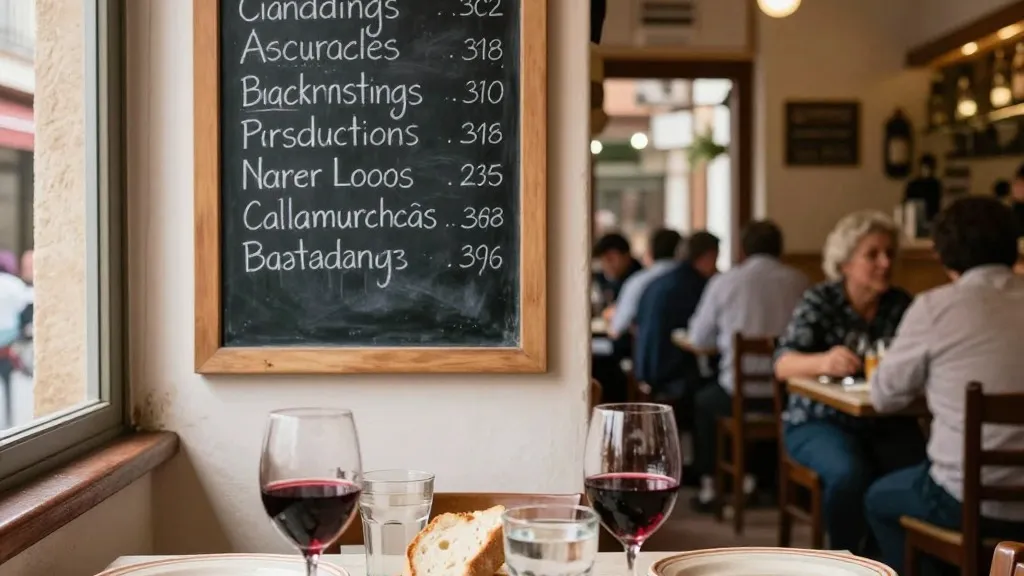
For Aguirre, the ideal version remains simple and unpretentious. She prefers a vegetable stew, followed by hake in green sauce or baby squid in ink, and finishes with fried milk or rice pudding. She judges a good restaurant by several signs: simple dishes, a changing menu, non-frozen chips, and a regular clientele. She looks for chalkboards that avoid trendy words like avocado or truffle. A bonus point is awarded if the owner's child is doing homework at a back table.
The stakes extend beyond the price of a meal. Aguirre argues that the setting is being lost as much as the food. It serves as a meeting point where families with limited budgets can dine out and solitary individuals can find company. She emphasizes that the true value lies not only in affordability but also in the time allotted to enjoy the meal without rushing.