Kim Jong Un Inaugurates New Yalu Bridge During Visit to Dandong
The North Korean leader crossed into China to open the new crossing, signaling a renewed emphasis on bilateral ties with Beijing ahead of a significant historical anniversary.
By Carolina Wood ·
Strategic relationships between major Asian powers continue to evolve as diplomatic and military ties are reevaluated. In this context, the leader of North Korea, Kim Jong Un, has completed a significant diplomatic trip to his southern neighbor.
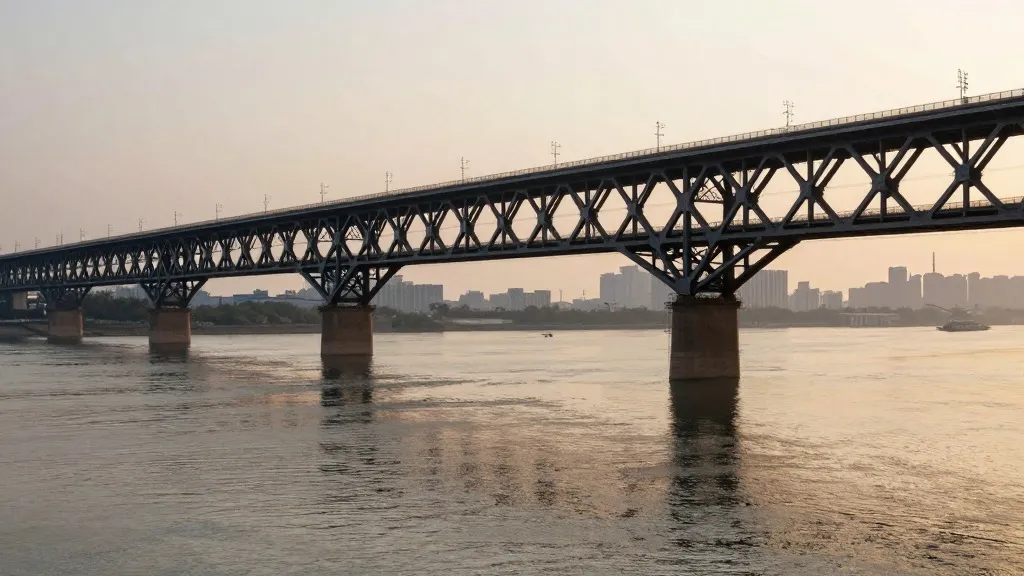
Kim arrived in the Chinese border city of Dandong on Saturday, having crossed the newly operational New Yalu River Bridge. This movement was confirmed by South Korea's ministry responsible for unification affairs, as well as by China's state news agency, Xinhua. The visit serves as a high-profile demonstration of the enduring bond between the two nations.
During his time in Dandong, Kim met with Wang Huning, a senior figure on the standing committee of the Chinese Communist Party. The two leaders conducted a joint tour of an automotive manufacturing plant, where they reaffirmed their commitment to deepening bilateral connections. Xinhua reported that Kim stated North Korea is prepared to collaborate with China to advance their long-standing friendship and broaden practical partnerships, aiming to provide concrete advantages to the citizens of both states. Wang accompanied Kim to the bridge to see him off at the conclusion of the visit.
The timing of this journey appears calculated to highlight the robust nature of Kim's relationship with Beijing. It occurs just days before the 25th of October, which marks the anniversary of China's first major military victory in the Korean War. That historical victory was achieved shortly after Chinese forces crossed the Yalu River into North Korean territory in late 1950, an event that remains central to the narrative of the alliance.
Local preparations for the visit included strict traffic management around the bridge and a nearby museum dedicated to China's involvement in the conflict. Reports from Japan's Kyodo news agency indicated that bookings at hotels in the vicinity were restricted. Diplomatic sources informed the agency that these logistical measures were specifically tied to the presence of a high-ranking North Korean official in the region.
The infrastructure at the center of this trip is the 3 kilometer bridge, which opened to traffic in mid-October. Construction was completed by China twelve years ago, though delays on the North Korean side had postponed its full operational status for many years. This development follows a similar project in early September, when North Korea and Russia opened the first road bridge across their shared short border. These projects now connect Pyongyang by land to its two primary international supporters.
This marks Kim's sixth trip to China and his first since September 2025, when he attended a military parade in Beijing alongside Chinese President Xi Jinping and Russian President Vladimir Putin. The diplomatic exchange continues to intensify, as Xi visited Pyongyang in June, a first for the Chinese leader in seven years. In contrast, relations with the South have deteriorated, with Kim's sister, Kim Yo Jong, issuing roughly ten critical statements toward Seoul since late September, a frequency described as unusual by South Korean officials.
Looking ahead, Xi is scheduled to host the Asia Pacific Economic Cooperation summit in Shenzhen on November 18 and 19. This event has generated speculation regarding a potential meeting between Kim and US President Donald Trump. However, reports from Reuters on Friday suggest that US and South Korean officials currently view the likelihood of such a meeting occurring this year as low.