Democratic Senate Control Alters Calculus for Supreme Court Reconstitution
Law professor Noah Feldman argues that holding the Senate makes it strategically unwise for Democrats to expand the court now, given the potential to shift the bench’s balance by 2028.
By Natalia Costa ·
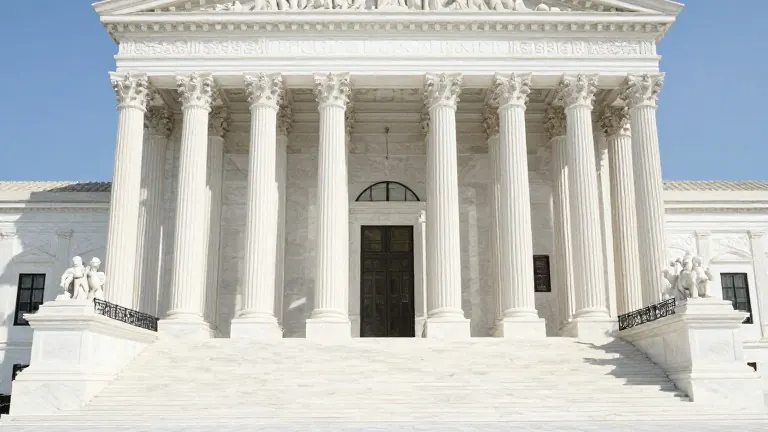
Noah Feldman, a professor of law at Harvard University and Bloomberg Opinion columnist, argues that Democratic control of the Senate changes the strategic approach to the Supreme Court. He contends that the party should reconsider plans to expand the court’s size or strip it of jurisdiction over specific issues. This shift in strategy is driven by the prospect of flipping the court’s ideological balance in the near future.
The core of Feldman’s argument rests on the potential for a Democratic presidential victory in 2028. If Democrats win the White House while retaining Senate control, they could replace enough conservative justices to shift the court from a 6-3 conservative majority to a 5-4 liberal one. This outcome would make immediate structural changes, such as adding new seats, less necessary. Feldman suggests that acting now could undermine the legitimacy of the institution before Democrats have the chance to reshape it through standard confirmation processes.
The dynamics of Senate confirmation have shifted since 2016. When Justice Antonin Scalia died on Feb. 13, 2016, President Barack Obama nominated Judge Merrick Garland to replace him. The Republican-controlled Senate refused to hold a vote on the moderate nominee. The court operated with only eight justices for the remaining 342 days of Obama’s term. President Donald Trump subsequently nominated Justice Neil Gorsuch, who was confirmed by the Senate in less than three months.
That episode broke an unwritten norm regarding the confirmation of nominees from the opposing party. Feldman notes that it is now almost certain a Democratic Senate would block a Trump nominee, even if the president had two full years remaining in office. This stance reflects growing Democratic frustration with what he calls the court’s conservative constitutional revolution. The Constitution does not mandate that the Senate confirm any specific nominee, allowing for strategic blocking.
Feldman also points out that the Constitution does not specify the number of justices on the Supreme Court. In theory, the court could shrink through attrition if the Senate consistently refused to confirm presidential nominees. While this outcome is not ideal for the court’s operations, it represents a political judgment by the Senate. Democrats might calculate that they have more to lose by confirming a Republican nominee than by blocking one.
The proposal to pack the court or limit its jurisdiction loses its logical footing if Democrats are confident in their ability to recapture a majority of the bench through regular turnover. Feldman advises Democrats to proceed carefully to avoid damaging the court’s standing. He emphasizes that the strategy should focus on waiting for the 2028 cycle rather than making immediate structural alterations.