Vendors report 74% of bulk team orders concentrate in three sizes
Printers cite four recurring errors in sizing that result in unusable inventory and financial loss for organizations ordering custom apparel.
By Thomas Obasi ·
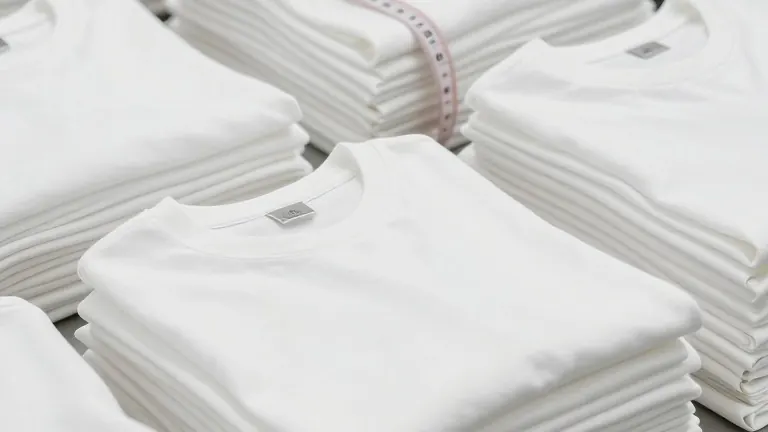
Custom print vendors identify four specific sizing errors that consistently ruin bulk team orders.
The first error involves distributing inventory evenly across all sizes. Data from industry orders shows that for adult groups, large, medium, and extra large account for roughly 74% of total volume. Small and double extra large follow, while triple extra large remains rare. This pattern shifts for specific demographics. Orders for pre-teens and young wearers represent about 11% of total volume. Women’s teams skew toward small and medium sizes. Casual groups tend to select larger sizes. Vendors recommend collecting exact measurements from individuals to establish an accurate baseline, even if the process takes time.
The second error relies on garment labels rather than physical measurements. Brand sizing varies, and cuts differ significantly. Unisex tees fit looser in the chest compared to women’s cuts. A women’s medium fits similarly to a unisex small. Semi-fitted styles run smaller, meaning a player who wears a large in a classic fit may need an extra large in a fitted style. Vendors advise measuring a well-fitting shirt flat across the chest, one inch below the armhole, and comparing that to the manufacturer's chart. Mixing different blank styles in one order increases the risk of fit inconsistencies, as two shirts labeled large can differ by a full size. Using a single style mitigates this issue.
The third error ignores the shrinkage properties of fabric. Preshrunk 100% cotton tees lose 2% to 5% in length and 1% to 3% in width after the first wash. For a large shirt, this equates to a loss of one to two inches. Hot water washing and drying accelerate this process. Polyester blends maintain their size more effectively. Vendors suggest ordering one size up for cotton garments or selecting a blend for teams that wash clothes frequently. Testing a sample by washing it before the full production run can prevent this issue.
The final error applies a single artwork size to all garments. A design sized for a medium shirt appears too small on a triple extra large and too large on a youth small. Chest prints typically measure 10 inches wide on a women’s small and 12 inches on a men’s large. Left-chest logos are usually 3.5 inches wide, while heart-placement prints are closer to 3 inches. The standard front-center placement is 2.5 to 3.5 inches below the collar seam. Printers scale artwork in groups, such as youth, small to large, and double extra large and up. Approving proofs for the smallest and largest sizes ensures the middle sizes fit correctly.
Vendors advise clients to send a specific size sheet that lists the exact brand and cut. Printers review hundreds of orders annually and can identify anomalies, such as a team of 20 listing nine small shirts. Ordering 5% to 10% extra inventory in medium and large sizes covers late additions or sizing errors. These extras in middle sizes are more likely to be used than those in extreme sizes.
More Business · Business Watchdog · Report a business · Got a Story?