Student Protests: 400,000 March in France
Massive demonstrations across France highlight deep divisions over school conditions and policing tactics in President Macron's final months.
By Carolina Wood ·
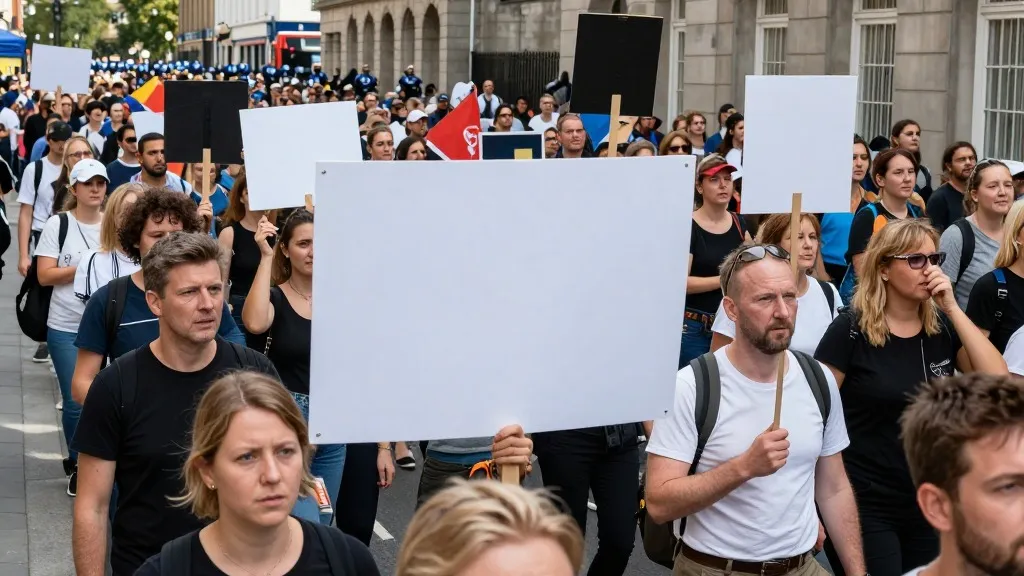
Government officials counted at least 400,000 people marching in cities across France on Saturday. Trade unions claim the number was double that. The crowd supported high school students who demand more teachers and better buildings. They also voiced anger over the high cost of living. Many felt the government used heavy-handed policing instead of political solutions.
The crisis started in mid-September. Students aged 15 to 18 began protesting staff shortages. They complained about leaking roofs and crumbling walls. Some classrooms lacked enough chairs. The movement grew quickly. Teachers, parents, and trade unions joined the students. It became the biggest youth movement in years. Police are now investigating injuries caused by explosive weaponry.
In Paris, at least 110,000 people walked along the eastern edge of the city. The mood was relaxed for much of the afternoon. Brass bands played music. Children and grandchildren joined the crowd. Banners criticized the government. One read, "Oppression breeds rebellion." Another said, "The right to protest." The marchers wanted to show their support for the students.
Tensions rose at the end of the Paris route. Groups of masked men in black threw glass bottles and stones at police. Officers responded with teargas and water cannon. They also used stun grenades. A bin caught fire near Porte de Vincennes. Fireworks were set off toward the police. Similar clashes occurred in other cities. Teargas was fired in Lyon, Lille, Montpellier, Nantes, and Toulouse. Bin fires were lit in Marseille.
The government deployed more than 70,000 police officers. Shops were boarded up and many museums closed. Officials feared a repeat of the previous Saturday. That day saw one of the most violent periods of unrest in years. Public buildings burned and hundreds of shops were looted. At least 2,700 people were arrested then. The government banned non-union demonstrations it deemed illegitimate. Protesters criticized Macron for keeping demonstrators away from city centers.
Nadège, a 43-year-old communications worker, was teargassed the previous weekend. She returned to the streets to defend the right to protest. She noted that people are afraid now. A 21-year-old student said France feels like an authoritarian regime. Jérôme Rodrigues, a figure from the 2018 yellow vest movement, said the government is afraid. He expects demonstrations to continue every weekend. Pierre, a 60-year-old retiree, marched for his granddaughter. He cited the government's refusal to listen.
In Orléans, thousands marched against a congress by Marine Le Pen's party. The crowd chanted slogans demanding Macron resign. They also called for Le Pen to be put in prison. Interior Minister Laurent Nunez said 135 people were arrested nationwide. Weapons were confiscated from the crowd. These items included metal balls, lead pellets, and slingshots. A katana sword and airsoft guns were also seized.