Pace Student Maps Library Trees to Meet NYC Climate Goals
Intern Thomas Scopino analyzed canopy coverage across 90 branches to support the city's 2040 target.
By Thomas Obasi ·
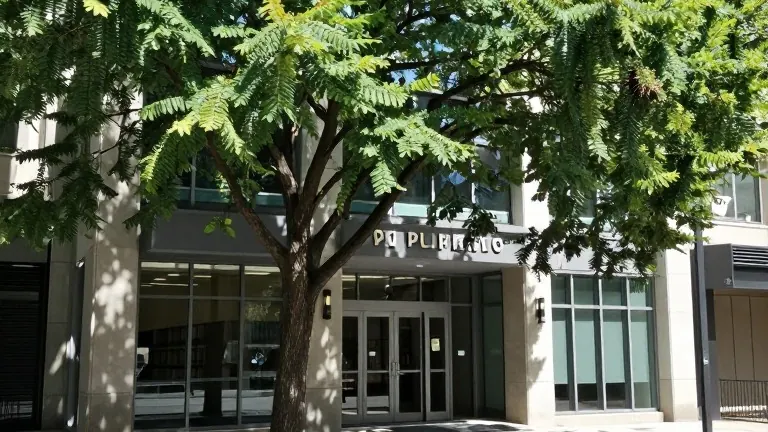
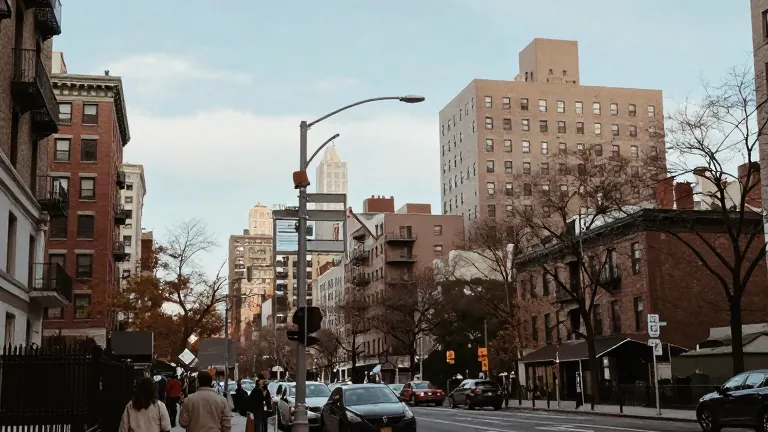
New York City aims to increase its urban tree canopy to 30 percent by 2040, a target that has survived multiple mayoral administrations. Thomas Scopino, a student pursuing a master's degree in Environmental Science and Policy at Pace University, spent his recent internship helping to measure progress toward that specific metric. His work focused on the New York Public Library system, a network that spans the entire city.
Scopino joined the pace community impact funded internship program to apply technical skills from his coursework in geographic information systems, statistical analysis, and sustainability economics. His primary task was to determine the scope of tree canopy at locations managed by the NYPL. He collected data to evaluate how existing green spaces could be protected and expanded. The internship required him to build GIS datasets that visualized ecological surveys and assigned economic values to those ecosystem services.
The project operated within a complex municipal framework. Scopino noted that the challenge involved prioritizing canopy expansion across various city agencies while competing with other major needs like housing. He worked to make an economic case for the value of urban trees, a necessary step to secure support for greener infrastructure. The NYPL manages over 90 locations across New York City, each serving as a distinct node in the city's climate resilience network.
Scopino discovered that these branches function as critical cooling centers during periods of extreme heat. In neighborhoods where air conditioning is limited, libraries provide essential relief for residents. However, maintaining these facilities requires balancing power usage with the city's grid demands. The library's energy team manages this balance to prevent rolling blackouts, a logistical challenge Scopino had not previously considered. He described the value of this infrastructure work as immense and central to the library's sustainability efforts.
Scopino began his academic career as a chemistry major at Carnegie Mellon University. He shifted his focus after learning about the environmental impacts of his field. He now views the current moment as important for sustainability, particularly regarding chemical remediation and energy usage. His time at the NYPL shifted his professional interest from hard science toward practical energy efficiency solutions. This experience also prepared him for potential corporate roles in addition to ground engagement work.
The NYPL continues to integrate sustainability practices into its operations across its 90 branches. Scopino's data contributes to the broader effort to meet the city's 2040 canopy goal. The internship concluded with a detailed analysis of ecosystem service values that supports the library's advocacy for greener urban spaces. Scope's work demonstrates how academic training in data analysis can directly inform public policy and infrastructure planning in a major metropolis.