Democrats Sweep 43 House Seats to End Republican Control of Congress
The party takes the House and Senate with a historic wave, setting the stage for immediate oversight battles and budget fights.
By Thomas Obasi ·
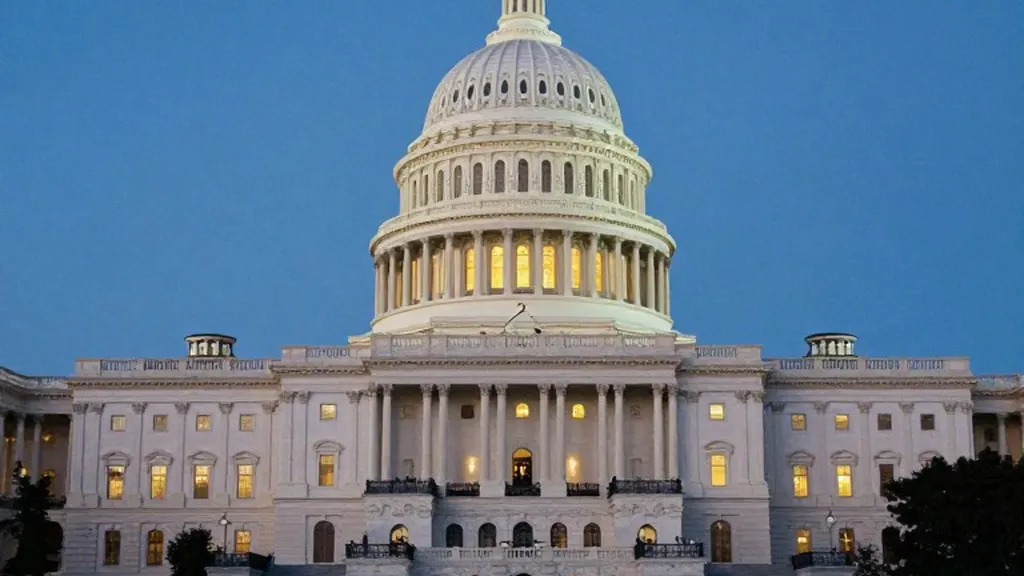
Washington witnessed a decisive shift in power on Tuesday as Democrats secured majorities in both chambers of Congress, marking a significant reversal for the Republican administration. The results, compiled by Ballotpedia, show Democrats picking up at least 43 House seats, including 42 previously held by Republicans and one held by an independent. This gain gives the party a commanding 250 to 157 majority in the House. In the Senate, Democrats captured seven seats, all of which were previously controlled by Republicans, resulting in a 54 to 44 majority. This level of seat loss for the president's party places the election in the top 20 percent of historical midterm cycles in terms of magnitude.
For Democratic readers, this outcome represents a new tool for accountability regarding the cost of living and health care. With control of the House, Democrats can now initiate spending bills and use their oversight powers to scrutinize the administration. The party also won a majority of governorships for the first time since before the 2010 elections, giving them a stronger foothold in state governments. This trifecta control allows them to influence state policies that directly affect voters, from education to infrastructure, without the constant gridlock that characterized the previous two years.
The immediate focus for the new Democratic leadership will be the Iran war and the administration's handling of foreign conflicts. Rep. Thomas Massie, a Kentucky Republican, moved to impeach Defense Secretary Pete Hegseth just hours after the House opened for its first session following the midterms. Massie argued that Hegseth knowingly executed unlawful orders in the conflicts involving Iran, Yemen, and Venezuela. House Democratic Leader Hakeem Jeffries supports the measure, and if most Democrats back him, Massie only needs a few Republican votes to pass the impeachment articles in the House.
President Donald Trump responded to the impeachment threat with characteristic bluntness, calling Massie a loser who has a lot of hatred in his heart. Trump also addressed the situation in a briefing, where he discussed the FBI investigation into Nvidia CEO Jensen Huang. Huang is alleged to have had an affair with a woman who was a Chinese government agent. Trump suggested he would be in good shape, noting that Huang had no idea the person was a spy. This development adds a layer of geopolitical tension to the new congressional landscape, as Democrats may seek to investigate how intelligence was handled during the administration's tenure.
The new Democratic majority in the Senate will also target the dismantling of the U.S. Education Department. Rep. Bobby Scott of Virginia, who will lead the House Committee on Education and the Workforce, promised to leave no rock unturned in his investigation. He plans to use subpoenas and hearings to examine how the Trump administration closed the department and managed federal student loans. Sen. Elizabeth Warren of Massachusetts called on her colleagues to hold the administration accountable for turning its back on students. These investigations will be central to the Democratic agenda, aiming to uncover the decision-making processes behind controversial policy shifts.
Democrats are also preparing to use the power of the purse to rein in the administration's education agenda. Sen. Chris Van Hollen of Maryland, a member of the Senate Appropriations Committee, indicated that the party will add conditions to spending bills to prevent further dismantling of the department. He described this as a way to stop the bleeding, even if it does not fully reverse the changes already made. This strategy reflects a pragmatic approach to the Republican money edge, using budgetary leverage to establish guard rails against what Democrats see as abusive practices in federal spending.
The election results also highlight the complexity of religious voting patterns in key states. In California, Xavier Becerra won the governor's race, becoming the state's fifth consecutive Catholic governor. The AP Voter Poll found that about 6 in 10 Catholic voters in the race supported Becerra, while about 4 in 10 voted for his Republican opponent, Steve Hilton. This result underscores the deep roots of Catholicism in California politics and the diverse ways in which faith informs political choices. The win for Becerra, a Democrat and former U.S. health and human services secretary, further solidifies the Democratic hold on the West Coast.
As the new Congress convenes, the challenge will be to translate these victories into tangible policy changes. The Republican party, now in the minority, will likely rely on veto threats and procedural tactics to slow down the Democratic agenda. However, with majorities in both chambers, Democrats have the numbers to override vetoes and pass legislation. The coming months will test their ability to unite their caucus and push through key priorities, such as health care reform and oversight of the defense sector. The wave election provides them with the momentum, but the work of governing will require careful strategy and consistent communication with their base.
The loss of 42 House seats for Republicans is short of the 48 seats needed to qualify as a traditional wave election, according to Ballotpedia metrics, but the Senate loss of seven seats is significant. This mixed result suggests that while the overall trend favors Democrats, the margin is not overwhelming in the House. This nuance will be important as the parties negotiate over budget and spending bills. Democrats will need to maintain their focus and discipline to ensure that their majority translates into legislative wins that address the concerns of voters who turned out in large numbers this Tuesday.