California Court: ICE barred from stopping Latinos based on appearance
A federal judge in Los Angeles found that agents routinely detained individuals based on race, prompting legal challenges in New York and New Jersey.
By Thomas Obasi ·
A federal judge in Los Angeles issued an order barring Immigration and Customs Enforcement officers from stopping people solely because they appear Latino. The ruling, dated October 23 and made public on Thursday, cites a body of evidence showing that agents frequently detained individuals based on racial stereotypes rather than specific legal grounds.
U.S. District Court Judge Maame Ewusi-Mensah Frimpong concluded that the plaintiffs in the case were likely to prevail. The temporary order stops the government from enforcing a policy that relies on broad racial categorization instead of an individualized assessment of reasonable suspicion. The judge stated that agents were making detentive stops of people who appeared Latino or Latino and working class.
The legal battle began with complaints from immigration advocates and civil rights attorneys across the United States. These groups accused federal agents of engaging in racial profiling to support the administration's mass deportation initiative. In New York and New Jersey, activists have filed similar challenges to stop the same unlawful practices locally.
Amy Belsher, director of Immigrants Rights Litigation at the New York Civil Liberties Union, said the California findings confirm that ICE has an unconstitutional policy of stopping people based on the color of their skin. She noted that the U.S. Constitution protects all residents from unlawful stops and detentions. Belsher emphasized that the country is not a "show me your papers" nation, which is why New York groups challenged the policy in court filings.
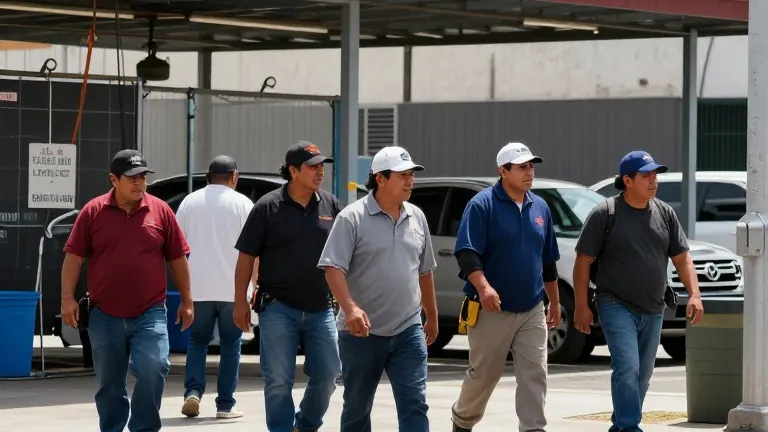
The judge’s opinion reviewed dozens of specific instances recorded on body-worn cameras. In these examples, federal officers explicitly used apparent Latino race as the basis for stopping and detaining individuals. The officers did not ask for or secure additional information to justify the stops. The detained individuals included Latinos dressed in work clothes, people at low-wage job sites such as car washes, and drivers taking children to school.
The court also cited evidence of officers using racial slurs and dehumanizing language when referring to the people they stopped. Lauren Michel Wilfong, staff attorney with the National Day Laborer Organizing Network and co-counsel for the plaintiffs, said the order clarifies that Latino workers have the right to live without being detained due to skin color. Wilfong credited the plaintiffs and class members for exposing the Department of Homeland Security's actions.
The Department of Homeland Security did not immediately respond to a request for comment. The LA Times reported that the Trump administration is appealing the order. This decision follows an earlier directive from Judge Frimpong that sought to limit ICE enforcement stops in California. That previous measure was blocked by the Supreme Court in an emergency order.
A Justice Department official told the LA Times that the new order would hinder immigration enforcement. The directive applies specifically to the Central California district. However, it addresses the same practices cited by legal teams in other states. The next scheduled step is the government's formal appeal of the temporary order.