Anthropic IPO Faces Trillion Dollar Infrastructure Reality Check
New disclosures reveal massive compute commitments and a strategic shift in AI hardware control that complicates the company's path to profitability.
By Natalia Costa ·

Anthropic, the developer behind the Claude artificial intelligence system, has released pricing details for its initial public offering that suggest a valuation between $1.3 trillion and $1.4 trillion. This figure falls short of early speculative estimates that ranged up to $2 trillion, yet it remains an extraordinary sum for a company whose primary asset is software. The disclosure marks a critical moment for investors and consumers who are increasingly concerned about the financial sustainability of the AI sector. The company’s own securities filings provide the foundation for these numbers, moving the debate from market speculation to documented financial obligations.
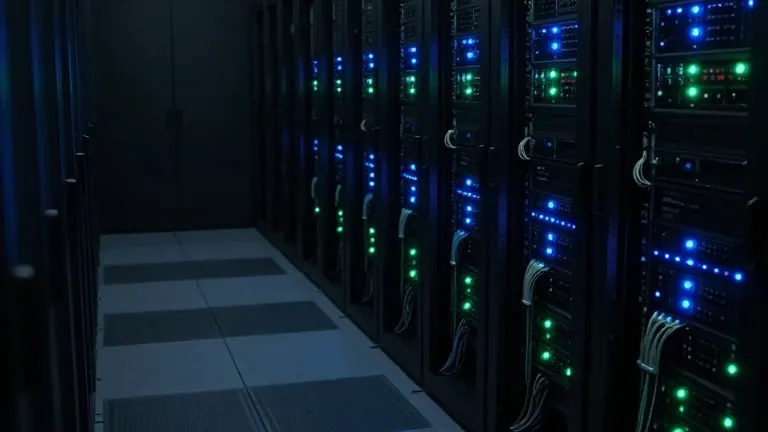
The most striking figure in the filings is approximately $900.9 billion in purchase commitments and lease agreements. These obligations are primarily tied to computing infrastructure. The company expects to incur roughly $451.6 billion of this cost before the end of 2030, with the remainder extending through 2045. Additionally, about $70.7 billion in these commitments are due within twelve months of September 30, 2026. While these are contractual spending obligations rather than immediate debt, they represent a massive future liability that requires substantial revenue generation to manage.
Anthropic’s financial position is supported by rapid revenue growth. The company’s annualized revenue run rate reached approximately $81 billion in October. This metric is significantly higher than the sub-$20 billion figures often cited in broader industry discussions. However, annualized revenue is not equivalent to profit or free cash flow. It represents the speed at which revenue is growing, not the amount of cash available to pay for hardware, electricity, and personnel. To justify a trillion-dollar valuation, investors must believe the company will eventually generate extraordinary profits that can absorb these hundreds of billions in infrastructure costs.
The underlying economics of serving AI users present specific challenges. Consider the cost of a high-end Nvidia GPU, which can retail for approximately $20,000. If such a device serves 15 to 20 light users at a $20 monthly subscription, the monthly revenue is $400. Recovering the hardware cost alone would take 50 months if all revenue went to that specific component. This calculation does not account for servers, cooling, electricity, maintenance, or engineering staff. Even at a hypothetical wholesale price of $4,000 per accelerator, the break-even period remains significant when all operational costs are factored in.
The distinction between user types further complicates these unit economics. Light subscribers who use the service intermittently may be highly profitable due to efficient hardware sharing. In contrast, intensive users running heavy coding agents consume more resources and reasoning capacity. A $200 subscriber who constantly demands high-performance output may have very different profitability margins than one who uses the service casually. The key metric for long-term viability is the contribution profit per customer after serving costs, a figure that requires transparent disclosure.
Nvidia is positioned to benefit regardless of which AI model dominates the market. The company supplies the essential accelerators, memory, and interconnects required for large-scale AI operations. When demand exceeds manufacturing capacity, prices rise and delivery times lengthen. Large technology firms can secure supply years in advance, creating a barrier to entry for smaller developers and independent researchers. This imbalance benefits Nvidia, whether or not it intentionally manipulates supply, as it consolidates its role in the hardware layer of the industry.
A recent strategic move underscores this consolidation. In September 2026, Nvidia announced an agreement to acquire Hugging Face for approximately $12.93 billion. The deal is expected to close in 2027, subject to regulatory approval. Hugging Face is a central hub for developers to discover and distribute machine learning models. By acquiring this platform, Nvidia would control a major distribution channel in addition to the hardware and software foundations it already provides. This combination raises competition-policy questions about whether the platform will remain neutral toward models that reduce demand for proprietary infrastructure.
The rise of open-weight models adds another layer of complexity to the proprietary AI business model. Projects from various global developers have demonstrated that advanced capabilities can be accessed without permanent subscription fees. These models can be downloaded and run on privately controlled hardware. This accessibility challenges the assumption that customers will remain dependent on centralized, expensive services. As technology improves, the ability to charge premium prices may not keep pace, similar to how the internet was a real technology during the dot-com bubble yet still led to significant investor losses.
Quantization technology further supports the viability of local AI deployment. This process reduces the memory precision required to run models. For instance, a 200-billion-parameter model requires roughly 400 GB of memory at 16-bit precision but only about 100 GB at 4-bit precision. While actual deployment needs are higher due to overhead, this reduction makes advanced AI practical on cheaper equipment. This trend gives developers and businesses more options, potentially reducing their reliance on single providers and altering the long-term revenue landscape for companies like Anthropic.