Americans spend $13.5 billion on Halloween, rooted in ancient Scottish traditions
While the holiday traces back to the Celtic festival of Samhain, modern commercial practices in the U.S. drive spending that is roughly fourteen times higher than in Britain.
By Carolina Wood ·
Halloween has become a major retail event in the United States, with consumer habits in 2026 far exceeding those in its country of origin. U.S. consumers are projected to spend $13.5 billion on the holiday, according to the National Retail Federation. By comparison, spending in Britain is estimated at $940 million.
Koen Pauwels, Distinguished Professor of Marketing at Northeastern University, attributes this disparity to differences in marketing infrastructure and social meaning. He notes that Halloween lacks religious obligations or mandatory family gatherings, allowing for pure participation and self-expression. Americans have expanded the celebration to include adults, pets, and extensive home décor.
The holiday originates from Samhain, a Celtic festival observed for over 2,000 years in Scotland, Ireland, Wales, and northern France. Celebrated between October 31 and November 1, Samhain marked the end of the harvest season and the beginning of the darker half of the year. The Ulster Folk Museum in Northern Ireland states that the boundary between the living and the dead was believed to be thinnest during this period. People lit large bonfires to attract good spirits and repel evil ones.
Victoria Millar, curator at the Ulster Folk Museum, describes archive records filled with stories involving masks, fires, and tales of ghosts and fairies. These practices served to entertain, warn, or protect households. Participants also ate harvest fruits that would not last the winter, such as apple pies and barmbrack. These baked goods contained hidden charms like rings, coins, or thimbles, which predicted the future of the person who found them.
Costume wearing dates back to early Celtic traditions, where people disguised themselves to hide from evil spirits. The specific tradition of dressing as a witch emerged much later, following the European witchcraft craze of the 17th century. Trick-or-treating also has Celtic roots, with participants dressing as spirits to beg for food or threaten households with curses. Francis Blessington, a professor of 17th-century English literature at Northeastern, notes that people would do anything to appease the dead or remove evil spirits.
As the Roman Empire expanded, Samhain incorporated elements of Roman festivals like Feralia. Later, Christianity aligned the date with Allhallowtide, a three-day observance from October 31 to November 2. In Britain, the 16th-century Reformation pushed these customs aside, replaced by Bonfire Night. Irish and Scottish immigrants brought many customs to North America in the 19th century, including the jack-o-lantern, which originated from an Irish myth about a man named Stingy Jack. Immigrants replaced turnips with native pumpkins.
In the United States, Halloween found a commercial slot between back-to-school and Christmas. From the 1930s to the 1950s, towns organized trick-or-treating to reduce vandalism. Postwar suburbs with walkable streets turned the practice into a neighborhood ritual. Halloween returned to Britain as an American import in the 1980s through films and television, including the Halloween movie franchise and the film E.T. the Extra-Terrestrial.
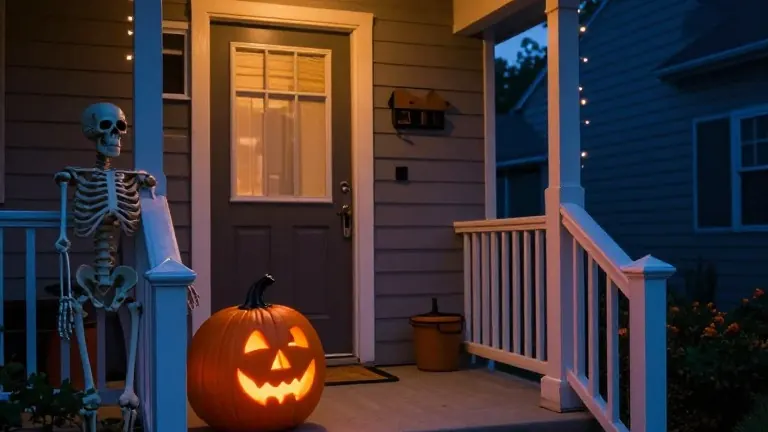
U.K. spending has grown steeply as the holiday gains attention among young consumers. However, Pauwels notes that one custom remains distinctly American: competing with neighbors using large lawn decorations, such as a 12-foot skeleton.