Rivian Acquires UK Team to Digitize Fleet Footage for Self-Driving Tests
The 15-person startup will convert over 400,000 daily video clips from Rivian vehicles into 3D environments to accelerate autonomous development.
By Carolina Wood ·
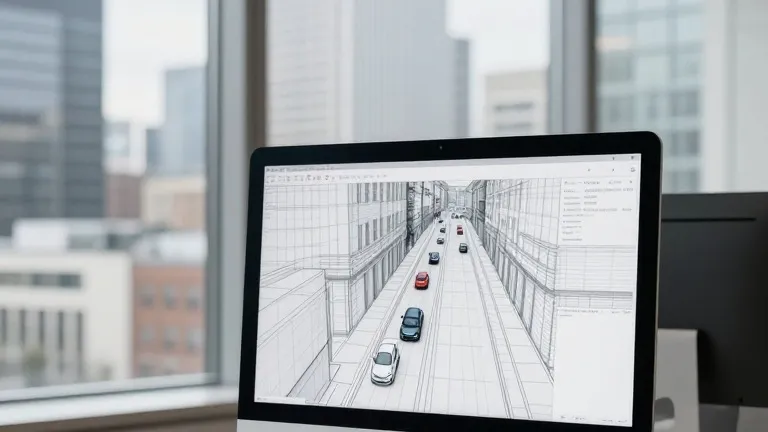
Rivian has acquired Third Dimension, a 15-person startup based in the United Kingdom, to rebuild real-world roads into 3D test environments for its self-driving software. The company did not disclose the purchase price. This acquisition aims to help Rivian process the vast amount of driving data its vehicle fleet generates daily.
Third Dimension was founded in 2024 by Tolga Kart and Piotr Sokólski. Kart previously worked on Tesla's Autopilot simulation and served as a senior director on Call of Duty at Activision. Sokólski spent four years at Wayve building neural simulators for self-driving cars. The startup raised a $7 million seed round led by Felicis in October 2024, listing autonomous vehicle companies as a target customer segment.
The entire Third Dimension team is joining Rivian's autonomy and AI group, which is led by James Philbin. Philbin stated that simulation is central to how the company trains and validates its autonomous driving systems. He noted that the startup has built technology that turns real-world data into detailed 3D environments. The deal also expands Rivian's operational presence in London.
The new process relies on footage from owners of the R1S, R1T, R2, and commercial vans who opt into camera data sharing. Philbin said the fleet sends back more than 400,000 driving sequences every day. While most of this material is uneventful, rare events that challenge autonomous systems are critical for training. Examples include a mattress in the fast lane, a police officer waving traffic through a red light, or a child running out between parked cars.
Engineers can now recreate these rare scenes in 3D and alter variables rather than waiting months for such events to occur naturally. This approach allows for more rapid testing and validation of the self-driving software. Rivian is not the first company to pursue this strategy, as Waymo unveiled its Waymo World Model in February and Tesla has shown a neural world simulator for its Full Self-Driving software.
The acquisition comes as Rivian faces tight timelines for its robotaxi deployment. In March, Uber agreed to invest up to $1.25 billion in Rivian to deploy R2 robotaxis. Only $300 million of that amount is paid up front. The remaining investment depends on autonomy milestones, including 10,000 driverless R2 vehicles operating in San Francisco and Miami from 2028.
Consumer-facing features are also on a revised schedule. Rivian's point-to-point driving feature is due to reach a small group of invited Autonomy+ owners later this year. Those testers must sign a nondisclosure agreement. The company has shifted its target for eyes-off driving from 2026 to 2027. Level 4 capability is planned for 2028 on the Gen 3 hardware.
More Business · Tech news · Business Watchdog · Report a business · Got a Story?