Northampton's $43 Million Main Street Plan Sparks Fierce Debate
A redesign project that has seen costs rise by 65 percent in two years is dividing residents over bike lanes, parking, and the city's future identity.
By Natalia Costa ·
Shop owners in Northampton are now fielding questions about their political stances from customers. Anna Bowen, who runs Strada Shoes, recently spent thirty minutes helping a woman fit into a pair of shoes. The customer paused at the register to ask if Bowen supported the Picture Main Street project. Bowen told the customer she was excited but nervous. The sale went through, but the interaction illustrated a new dynamic in the local retail space.
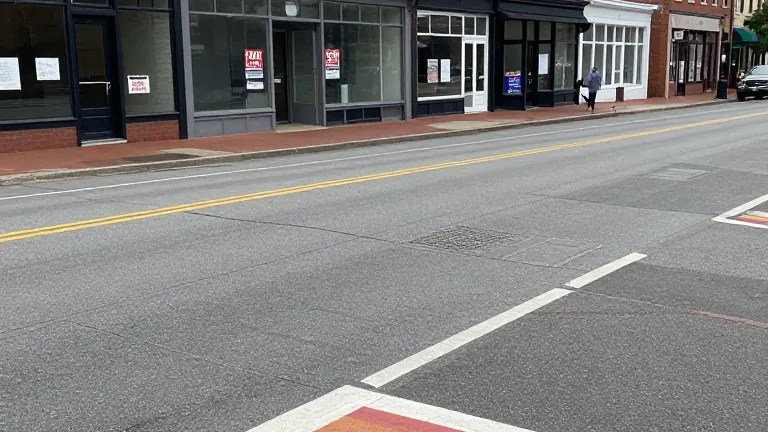
The project aims to redesign half a mile of downtown asphalt. It includes separated bike lanes, narrower roads, and reduced parking. City leaders say the work is necessary to fix broken sidewalks and replace aging water and sewer lines. The total cost is now $43.3 million. Most of the funding comes from state and federal grants. Northampton's share is $11.8 million.
The price tag has grown significantly. Two years ago, the estimate was $26.3 million. That is a 65 percent increase. Carolyn Misch, the city planning sustainability director, said the city could not afford the work on its own. Inflation and the war in Iran have contributed to the rising costs. Construction for the first phase is scheduled to start in 2028. The entire project could take five years to complete.
Residents are split on the plan. Robert McGovern, an 81-year-old bar owner, opposes the bike lanes. He said people will not ride bicycles to downtown to shop. He called the plan the kiss of death for downtown. Jennifer Nery, a local acupuncturist, supports the changes. She wants to remove all parking from the street to create a stronger public square.
Mayor Gina-Louise Sciarra inherited the project from her predecessor. Critics on social media call it her golden ballroom. One resident in the Public Comment Northampton Facebook group said the mayor does not care what residents think. Sciarra said she hears from people who are afraid to speak at public meetings. She described that hesitation as unhealthy for democracy.
The road itself presents challenges. It is one of the widest in New England. In some places, it is 90 feet wide. Misch compared the street to a python. The number of lanes varies from one to three and a half. A local bookseller said she has lived there for thirty years and still does not know how to drive down the street.
Safety data supports the redesign. The state Department of Transportation identified Main Street as a top crash cluster for pedestrians and cyclists between 2008 and 2017. The city averages about one crash per week. Wayne Feiden, who retired from the planning department in 2022, said the street was built in the 19th century. He noted that people have more shopping options now than they did back then.
The project traces back to the 2010s. City leaders wanted a downtown that met the needs of a new generation. Mazie Cox was part of the team that revitalized downtown in the late 1970s. She worries the current plan goes too far. She said the streets were dirty and bricks were coming up when she visited recently. She fears vital retail will suffer.
Jason DeGray is the lead engineer for the project at Toole in Boston. He said Northampton punches above its weight in public discourse. He called it a hard conversation about how the city reinvests in itself. Liza Styles, a resident and mother of two, said the change is difficult. She compared the project to Northampton's version of the Big Dig.