Milwaukee studio uses hip-hop step dance to address local health gaps
Founder Miracle Jones leverages her social work background to create a community space, while CDC data shows a 7.8 percentage point disparity in aerobic activity between Black and white adults.
By Thomas Obasi ·
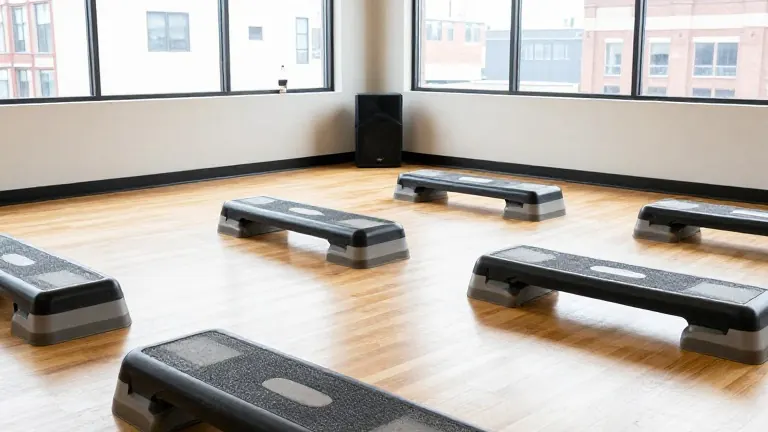
A Milwaukee fitness studio is combining hip-hop music with step aerobics to help residents meet federal health guidelines. Miracle Step Gang, located at 5254 N 124th St., offers classes that founder Miracle Jones designed to address both physical fitness and social connection. The studio serves as a practical response to national data showing that 41.4% of Black adults met aerobic activity standards in 2024, a figure lower than the 49.2% of white adults who met the same benchmarks.
Jones previously worked as a residential case manager at a rehabilitation facility. She left that role to launch her own business after discovering that step dancing helped her manage mental health challenges following the birth of her baby. She stated that social work, mental health, and physical health are interconnected. Her approach focuses on creating a low-pressure environment where participants can move and socialize without the intensity of traditional competitive gyms.
The studio’s programming is structured to accommodate different experience levels. A standard class runs for one hour and 15 minutes. For those new to step fitness, Jones offers an optional 45-minute breakdown session before the main workout. In these smaller groups, beginners practice specific movements before joining the larger class. Participants can pay per session or purchase a membership.
Participants cite the social aspect of the classes as a primary motivation. Markia Highshaw, a mother who lost her mother at age 24, described the sessions as a form of therapy. She noted that the routine provides a necessary pause in her daily responsibilities. Yolanda Weathersby, another member, said the familiar music from her youth helps make the exercise feel less like a chore. The atmosphere encourages laughter and mutual support rather than individual performance metrics.
The Centers for Disease Control and Prevention recommends adults get at least 150 minutes of moderate-intensity aerobic activity per week. The agency also notes that access to safe and convenient places to exercise is a factor in racial health disparities. Jones acknowledged that while her classes do not replace professional medical care, they provide a structured space for residents to improve their well-being.
Jones aims for participants to leave each session feeling refreshed. She views the friendships formed during classes as a key success metric. The studio operates as a no-judgment zone where people of various ages and fitness levels can gather. Information about registration and class schedules is available through the studio’s social media pages.